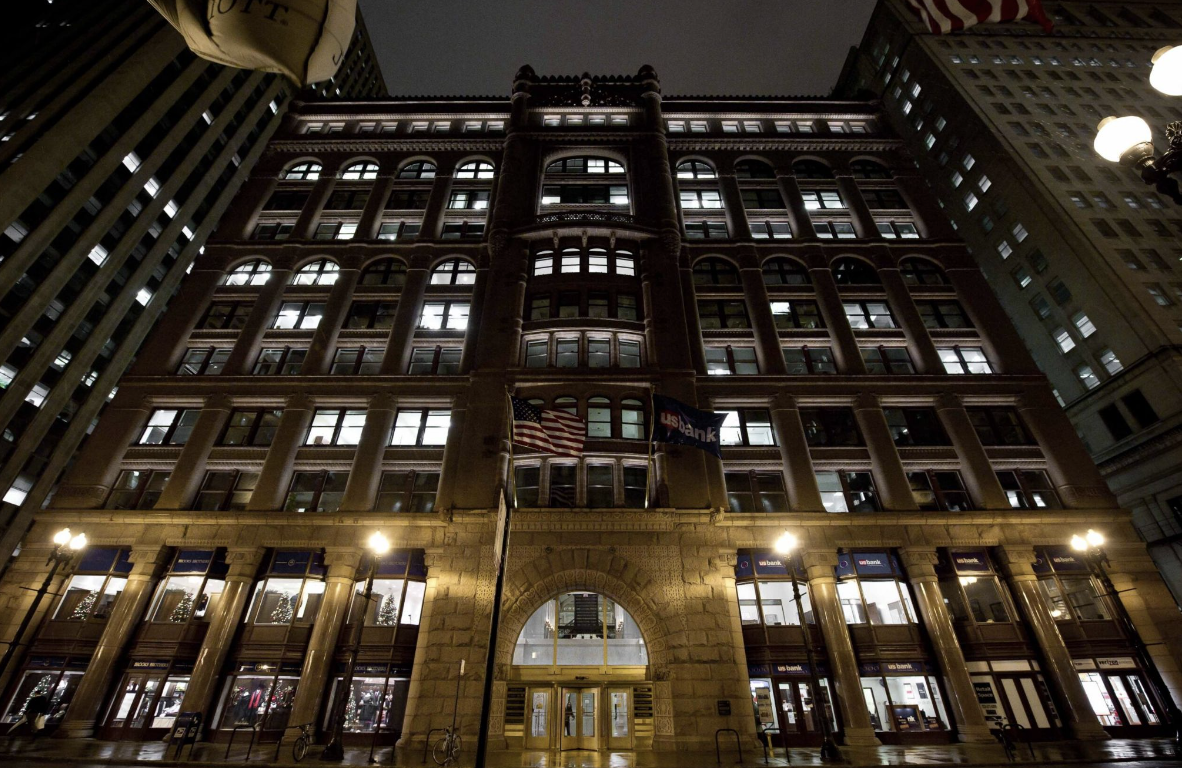

The Rookery Building is widely considered one of the world’s first skyscrapers. This legendary architectural masterpiece was built in Chicago on the exact site of the former City Hall, which was destroyed by the Great Chicago Fire of 1871. ichicago.net explores what this historic high-rise looks like today and the fascinating story behind its name.
When Was the Rookery Building Built?
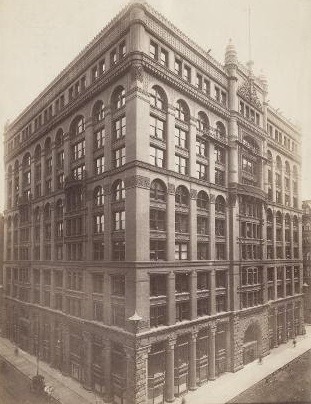
The 1870s marked the beginning of Chicago’s rebirth following the devastating destruction of the Great Fire. This pivotal era laid the groundwork for the modern American skyline, sparking a massive boom in commercial high-rise construction.
The prominent architectural firm Burnham and Root was thriving in the city at the time. In 1885, they landed a major commission to design a skyscraper in Chicago’s bustling financial district. The construction itself was managed by the Central Safety Deposit Company, which secured a 99-year land lease from the city government. In just three years, the ambitious high-rise project was fully completed.
By the late 19th century, the Rookery Building stood as one of the tallest structures in the world and a true architectural marvel. When it opened its doors in 1888, the skyscraper housed roughly 600 offices, quickly earning a reputation as Chicago’s most prestigious and expensive commercial hub.
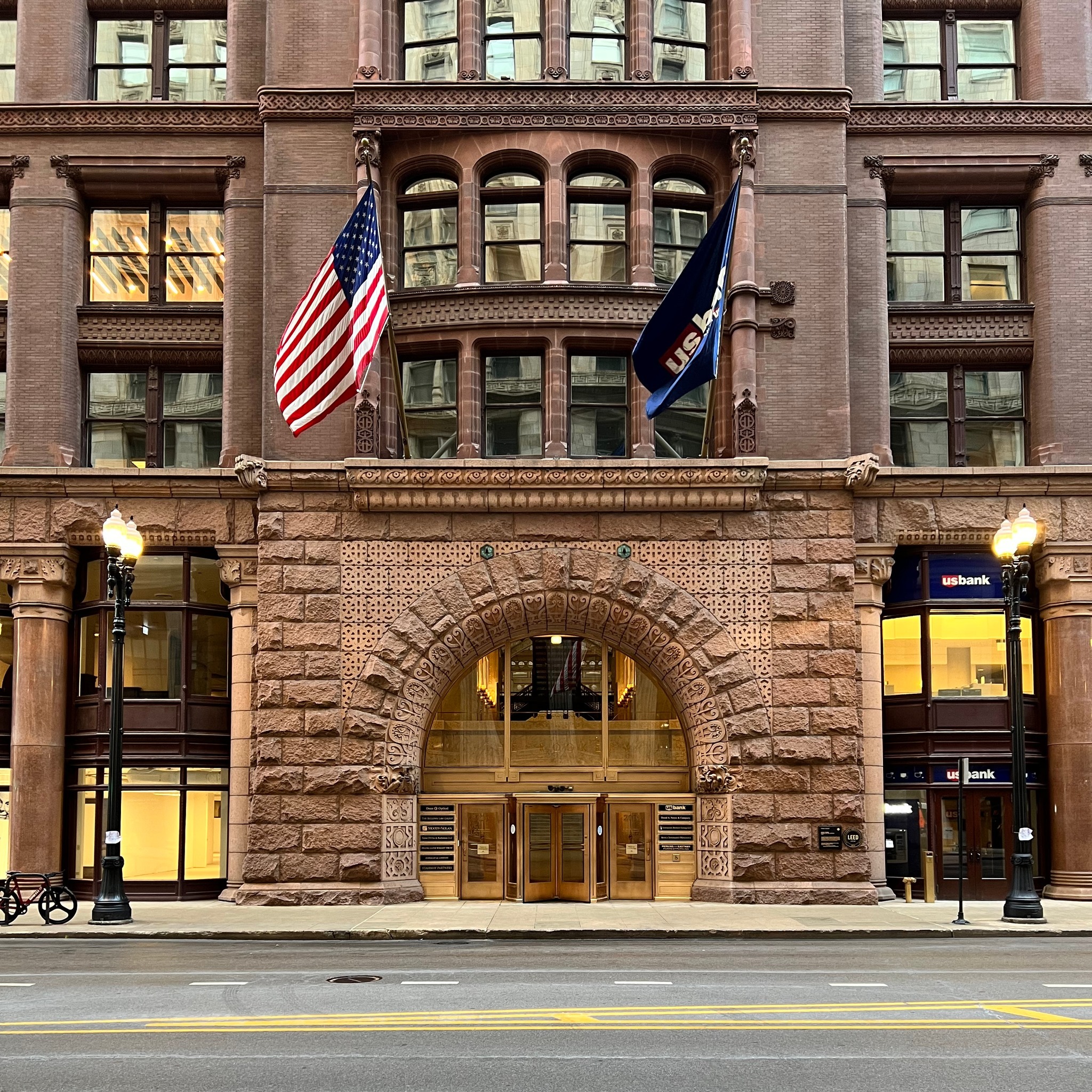
The building’s unique name also comes with a fascinating backstory. Shortly after the devastating fire, a temporary city hall and water tank were erected at the very intersection where the Rookery now stands. These makeshift structures became a magnet for birds—leading locals to nickname the site “the rookery” due to the massive nesting colonies of crows and pigeons on the roofs. To honor this quirky piece of local history, the architects incorporated a pair of symbolic, carved rooks into the archway of the building’s main entrance.
The Industrial Revolution and 19th-Century Chicago Architecture
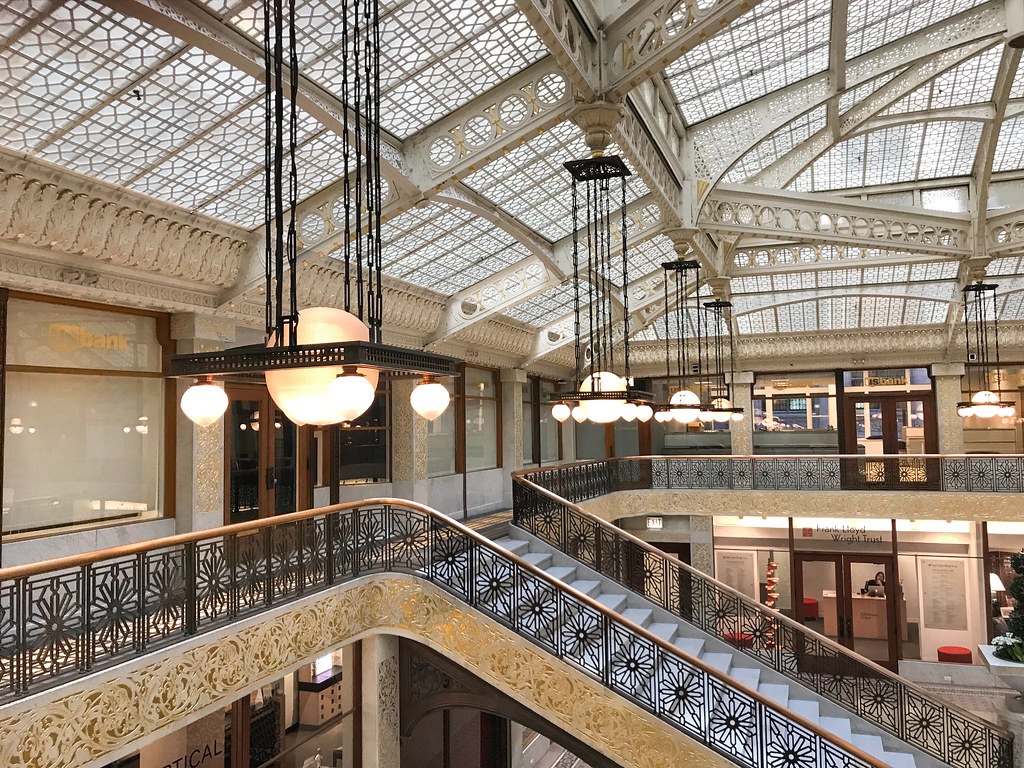
In the late 19th century, most Chicago office spaces suffered from dismal lighting and poor ventilation. A typical commercial building featured long, dark corridors lined with rental offices on both sides. With staircases usually tucked away at the far end of the hall, the interiors were notoriously starved of natural light.
However, the late 1800s brought major breakthroughs in glass and iron manufacturing. These advancements empowered architects to design buildings with vastly improved internal lighting and airflow. John Root proposed a brilliant solution: designing the skyscraper around a massive central light court. This innovative layout ensured that nearly every square foot of the interior was bathed in natural light. A stunning glass roof enclosing the lower-level lobby further enhanced this bright, airy feel.
The Architectural Style and Design of the Rookery Building
Spanning an impressive footprint, the Rookery Building occupied nearly a quarter of a city block at the corner of Adams and LaSalle streets. The structure was built in a square, hollow-core layout. This clever design was the key to providing every single office with ample sunlight and fresh air.
The building was packed with cutting-edge technological innovations. It featured a specialized metal framework, dedicated electrical systems, and both hot and cold running water piped directly into the offices. It was this sturdy iron and steel frame that allowed the building to reach a height of 181 feet (55 meters)—a staggering engineering achievement for its time.
Even today, the architects’ vision for the Rookery Building remains awe-inspiring. Designed by Daniel Burnham and John Root—pioneers of the Chicago School of Architecture—the skyscraper boasts a distinct aesthetic known as Richardsonian Romanesque. The striking contrast between its dark red masonry and rugged granite base created a bold, unmistakable exterior that made the office hub stand out against the rest of the city skyline.
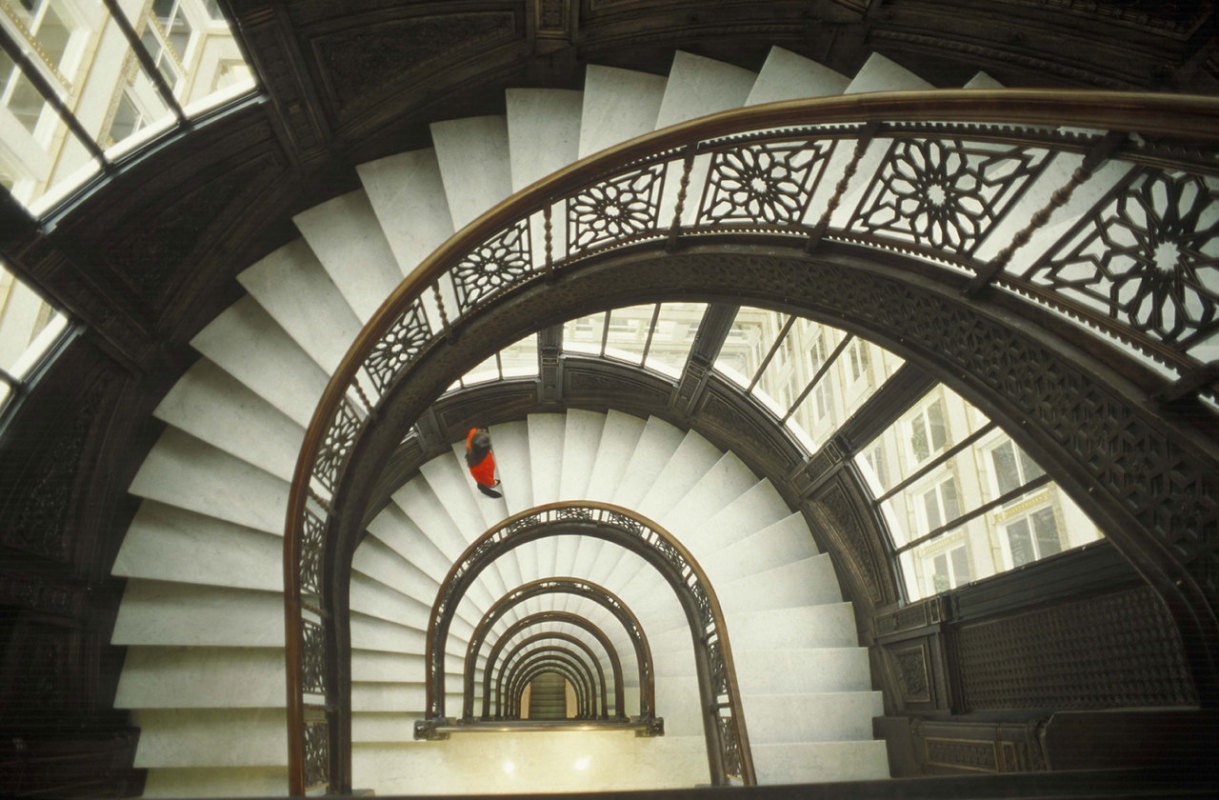
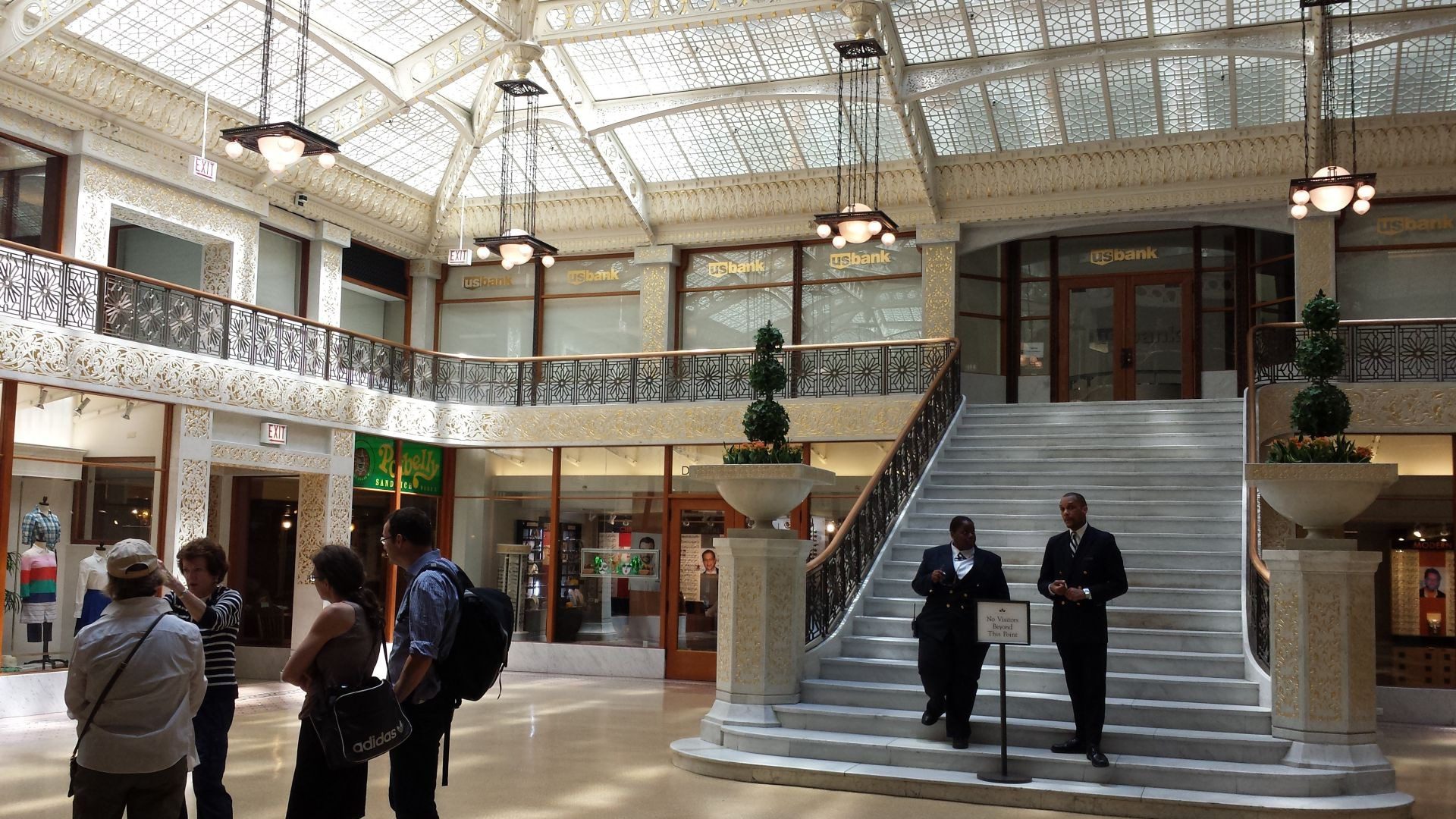
Yet, arguably the most breathtaking feature of the Rookery Building is its interior design. The heart of the commercial center features a majestic, light-filled two-story atrium, highlighted by an intricate, spiraling oriel staircase that winds its way to the upper floors. These masterfully crafted stairs were hailed as an innovative marvel and the absolute pinnacle of architectural vision at the time.
To cultivate a sense of weightlessness and elegance, the architects adorned the interior space with geometric mosaic flooring, polished stone columns, and exquisite gold-leaf detailing. Visitors were instantly captivated by the opulent metalwork, which seamlessly blended delicate iron tracery with rich, gleaming marble.
Another groundbreaking construction technique introduced here was the development of the “floating foundation.” Supporting such an incredibly massive structure required a rock-solid base on Chicago’s famously swampy soil. To solve this, John Root pioneered the idea of interlacing iron railroad rails with structural steel beams. This grillage was then encased in concrete, creating a buoyant foundation capable of supporting the multi-ton skyscraper.
In 1905, the legendary American architect Frank Lloyd Wright was brought in to remodel the Rookery Building’s lobby. He focused his efforts on maximizing the light within the atrium, introducing additional glass elements and his signature geometric motifs. Wright’s brilliant updates in style and functionality solidified the skyscraper’s status as a true architectural jewel of the 20th century.
By 1980, the Rookery Building faced a serious threat of demolition, as city officials were eager to tear it down to make way for a more modern development. Fortunately, the building had already secured its status as a National Historic Landmark, which ultimately saved it from the wrecking ball.
Is the Rookery Building Open to the Public?
Over a century after its construction, the Rookery Building remains a thriving business center in Chicago. It also draws hundreds of tourists from around the world who are eager to witness this masterpiece of 19th-century architecture firsthand.
While the office building is open to the public, there are a few restrictions. Access to the upper floors is strictly reserved for office workers and their clients. However, the stunning Frank Lloyd Wright-designed atrium is open for anyone to explore and admire.
For tourists looking to dive deeper into the skyscraper’s rich architectural history, specialized guided tours are available. The atrium is generally open to the public during regular weekday business hours, while weekend tours are typically not offered.
Fascinating Facts About the Legendary Skyscraper
The Rookery Building has survived decades of change and renovation. It stands as a powerful symbol of innovative design that forever altered the course of global architecture. Here are some of the most fascinating facts about this legendary high-rise, which continues to inspire designers and architects today.
- After construction was completed, architects Daniel Burnham and John Root moved their own firm’s offices into the new commercial center. Interestingly enough, Frank Lloyd Wright—who would later remodel the building’s interior—also briefly kept an office here.
- In 1993, the American Institute of Architects (AIA) honored the dynamic duo of Burnham and Root with a prestigious award for their architectural contributions.
- In 1972, the Rookery Building was officially designated as a Chicago Landmark.
- The massive success of the Rookery’s internal light court made it highly influential. This pioneering approach to natural lighting became a standard feature in many subsequent Chicago office buildings.
- The ornate detailing on the building’s exterior is an eclectic mix of several architectural styles, seamlessly blending Venetian, Romanesque, and even Islamic motifs.
- While the name “Rookery” refers to a nesting colony for birds, its origins aren’t solely tied to the avian residents that flocked to the site. In 19th-century slang, the word “rook” also meant to cheat or defraud. Savvy Chicagoans used this double meaning to poke fun at the famously corrupt local politicians operating out of the temporary city hall.