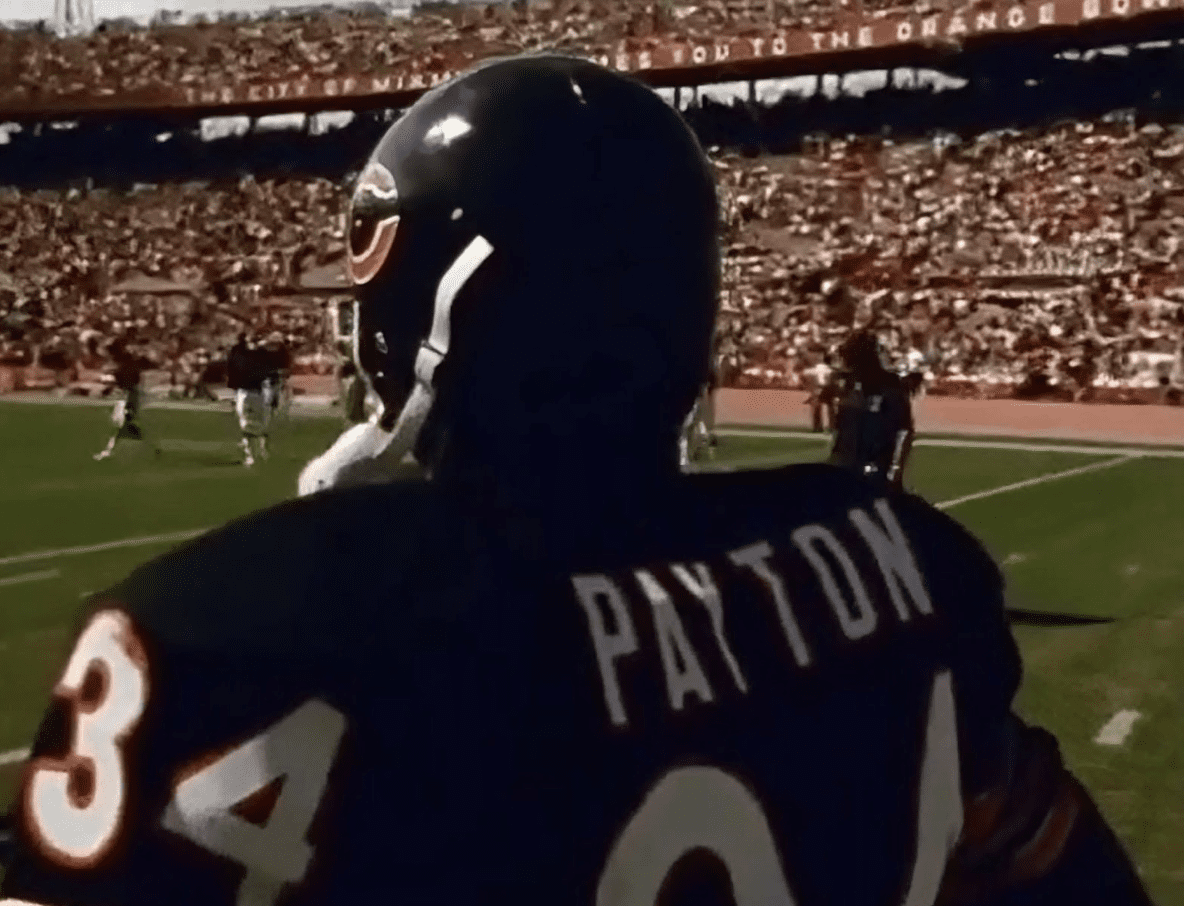

His name is forever etched in the annals of American football. A relentless work ethic, an unwavering spirit, and brilliant talent solidified his legacy as one of the greatest running backs of all time. Behind his impressive athletic records lies an equally compelling story of personal growth, resilience in the face of life’s challenges, and an inspiration to athletes across the globe. Read more on ichicago.
Early Life and Background
The future football player was born in Columbia, Mississippi, to Peter and Aline Payton. His father worked at a factory and, at one point, played semi-pro baseball. Walter was an active child, involved in the Boy Scouts, playing baseball, singing in the church choir, and learning the drums. In high school, he was a true multi-talented individual, simultaneously performing in the school band, competing in track and field, playing basketball, and singing in the choir.
Football wasn’t an immediate priority. His older brother, Eddie, was already on the team, and Walter initially didn’t want to compete with him. It was only after Eddie graduated that the coach convinced Payton to join, allowing him to stay in the school band. His very first touch of the ball resulted in a 65-yard touchdown, a stunning harbinger of the legend he would become. Payton quickly rose to state stardom: he scored in every game for two seasons, was selected to the Mississippi All-State team, helped his team achieve one of its most successful seasons, and even played a role in easing tensions during school desegregation.
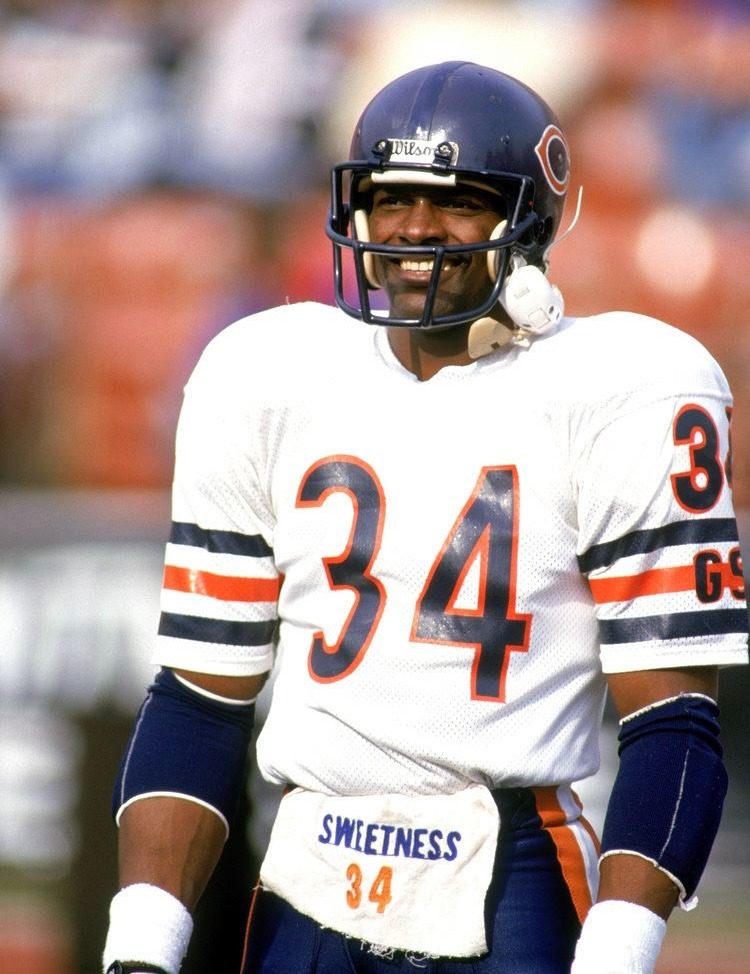
Despite his outstanding high school achievements, Payton did not receive offers from any SEC universities. He initially planned to attend Kansas State but ultimately chose Jackson State. There, he became part of one of the most talented teams of the era. His teammates included future NFL players Ricky Young, Robert Brazile, and Jackie Slater. Over four years, Payton rushed for 3,600 yards, averaged 6 yards per attempt, and set a university record with 65 rushing touchdowns. He was twice named the top player among HBCUs and earned All-American status. It was here that he earned his legendary nickname, “Sweetness”—whether it was for his gentle personality, his fluid running style, or, ironically, for the punishing way he played the game. In 1972, Payton delivered one of college football’s most spectacular performances: seven touchdowns, two two-point conversions, and 279 yards, setting an all-time SWAC record at the time.
The Chicago Bears Era
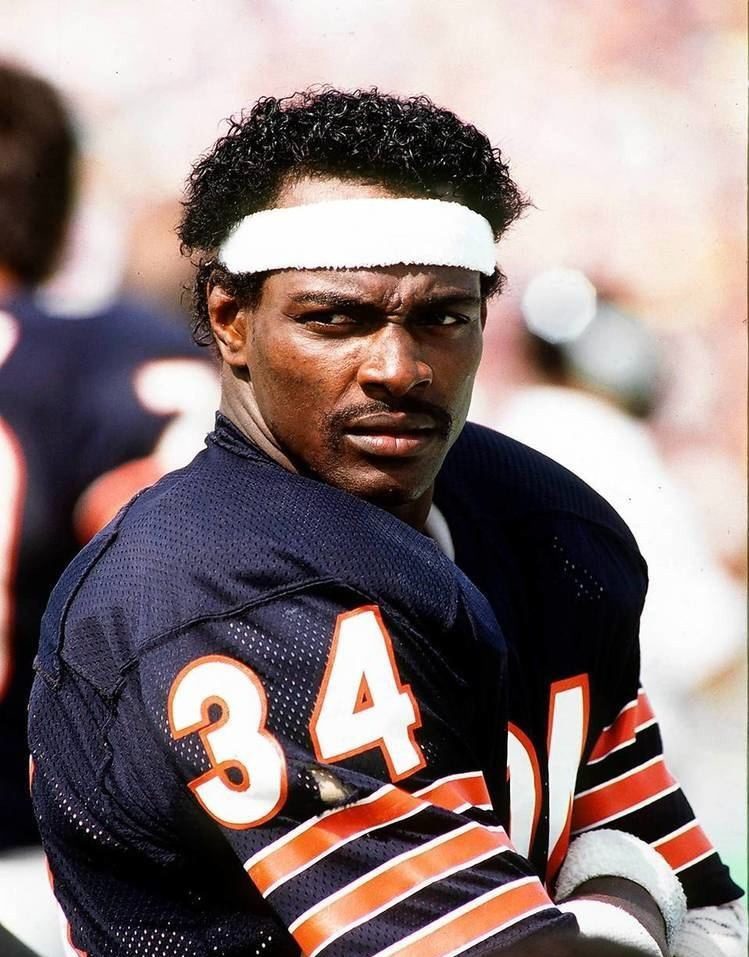
The Chicago Bears selected Payton with the fourth overall pick in the 1975 draft. The team was going through a difficult period following Gale Sayers’ retirement, and Payton was tasked with becoming the franchise’s new face. The start was tough: he failed to gain a single yard in his first game. However, the following year, he broke into the NFL’s elite, rushing for 1,390 yards in 1976 and a league-leading 1,852 yards in 1977, earning the league’s MVP award. It was also in 1977 that he set a single-game rushing record that stood for 23 years—275 yards against the Minnesota Vikings, achieved while battling a high fever. By the end of the 1970s, Payton had become the team’s do-it-all player, running, catching passes, blocking, and occasionally even taking on punting duties.
With the arrival of coach Mike Ditka in 1982, the Bears gradually evolved into one of the league’s powerhouses. In 1984, Payton shattered Jim Brown’s historic career rushing record of 12,312 yards, becoming the NFL’s all-time leading rusher. The 1985 season was legendary for Chicago: the team finished the regular season with a 15-1 record, their dominant “46 defense” overwhelmed opponents, and the Bears ultimately won Super Bowl XX. Despite Payton not scoring a touchdown in the final game, his role was pivotal—opposing defenses were forced to focus their entire strategy on stopping him.
In 1986, Payton rushed for another 1,333 yards, and following the 1987 season, he announced his retirement. Over 13 years in the NFL, he accumulated a staggering 16,726 rushing yards, 110 touchdowns, nearly 500 receptions for over 4,500 receiving yards, and even threw 8 passing touchdowns—a record for a running back. His iconic No. 34 was permanently retired by the Bears, and he was inducted into the Pro Football Hall of Fame in 1993.
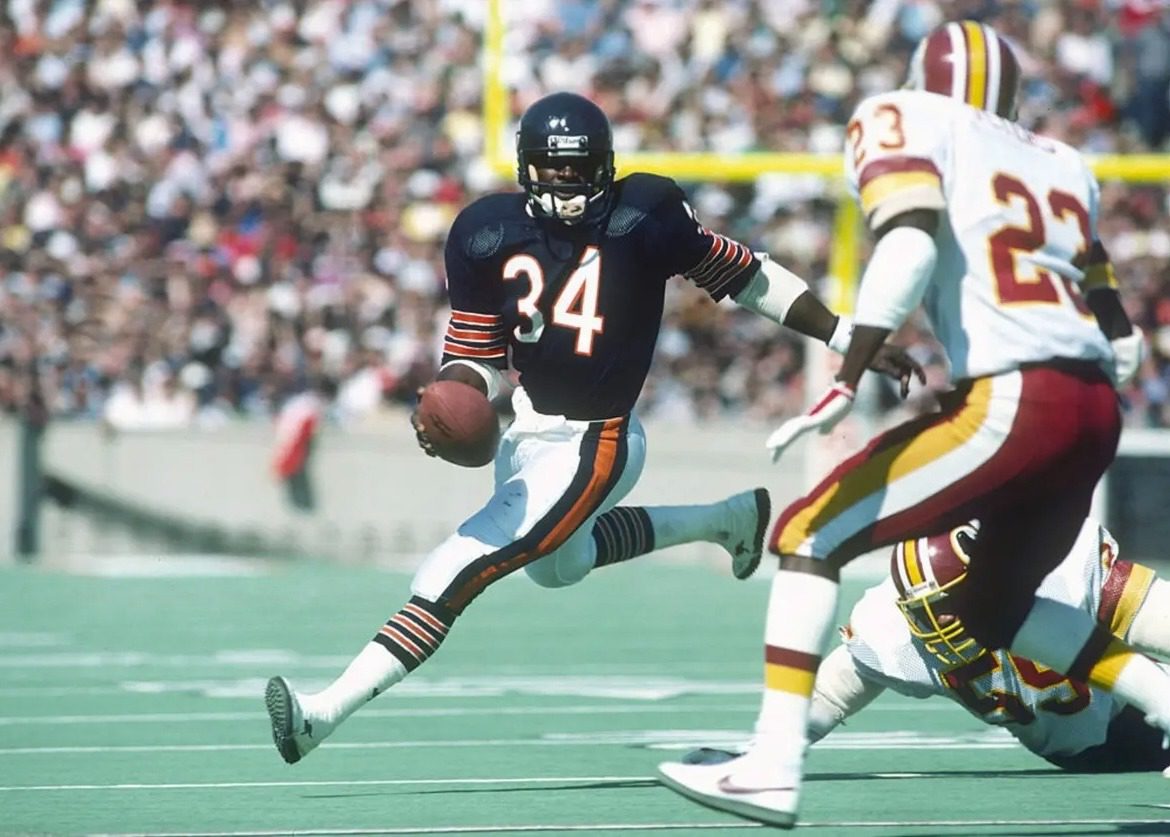
Payton was a unique blend of power and finesse. His signature moves included the “stutter-step,” which disoriented defenders, and leaping over opponents. His personal motto, “Never Die Easy,” meant he would never run out of bounds without fighting for every possible yard.
Life After Football
Payton’s NFL career spanned 13 seasons, from 1975 to 1987. During the 1986 season, he continued to be highly productive, recording 1,333 rushing yards and eight touchdowns, along with 382 receiving yards. However, roles began to shift in 1987—the team was preparing a successor at the running back position (Neal Anderson), and “Sweetness'” workload was reduced. This signaled a change, leading Payton to decide to retire after the 1987 season.
Over his 13 seasons, Payton set phenomenal records: he retired as the NFL’s all-time rushing leader with 16,726 yards. Furthermore, he tallied 110 rushing touchdowns, was a five-time First-team All-Pro, a nine-time Pro Bowl selection, and set dozens of records for both the Bears and the league. Payton’s retirement was a loss for the Chicago Bears but marked a new chapter in league history. His records set a high bar for future generations, and his approach to the game demonstrated that a running back could be versatile, durable, and multi-functional.
Personal Life and Legacy
Payton was actively involved in business ventures. He attempted to become part of the ownership group for a new NFL team in St. Louis, participated in CART and Trans-Am auto racing, founded Walter Payton Power Equipment, and opened the multi-functional Walter Payton’s Roundhouse in Aurora, which became a popular, award-winning cultural center.
In 1976, Payton married Connie Norwood, and the couple had two children, Jarrett and Brittney. Although the marriage was never formally dissolved, the couple lived separately in the later years. Following his retirement, Payton struggled with depression and even expressed suicidal thoughts. Among his personal hardships was a 1988 incident where a manager at a nightclub Payton owned was accidentally shot. Off the field, he was known for his modesty, diligence, and genuine kindness. He was actively involved in charity and community work, establishing the Walter and Connie Payton Foundation, which supported children and organ donation awareness. Among friends and colleagues, he valued teamwork and mutual support, and his peers often remember him as a person who always made time to offer advice or help.
In 1999, Payton announced he was suffering from a rare disease, primary sclerosing cholangitis, which eventually led to bile duct cancer. He became a passionate advocate for organ donation, appearing on television to urge others to save lives. Walter Payton passed away on November 1, 1999, at the age of 46. The NFL honored his memory during every game that week, and the Chicago Bears added memorial patches with his number 34 to their jerseys.
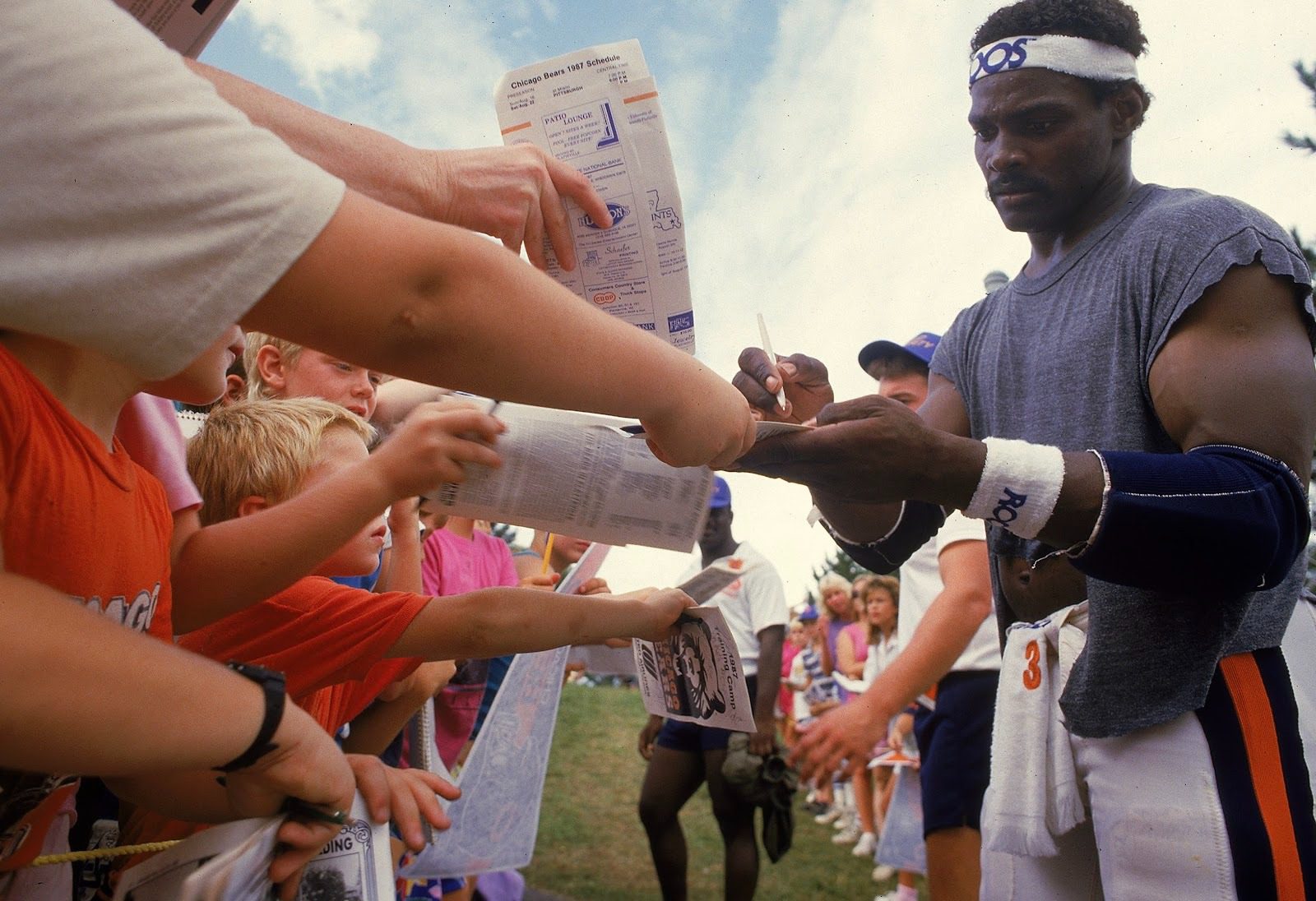
Payton left behind an enormous legacy both in sports and beyond. The Walter and Connie Payton Foundation he established continues its work supporting organ donation development and aiding children. Streets, schools, and sports centers are named in his honor. NFL players today still cite him as an inspiration, and the Walter Payton Man of the Year Award has become one of the league’s most prestigious honors. Asteroid No. 85386 is also named after him. In 2019, the Chicago Tribune named Payton the greatest player in Chicago Bears history.