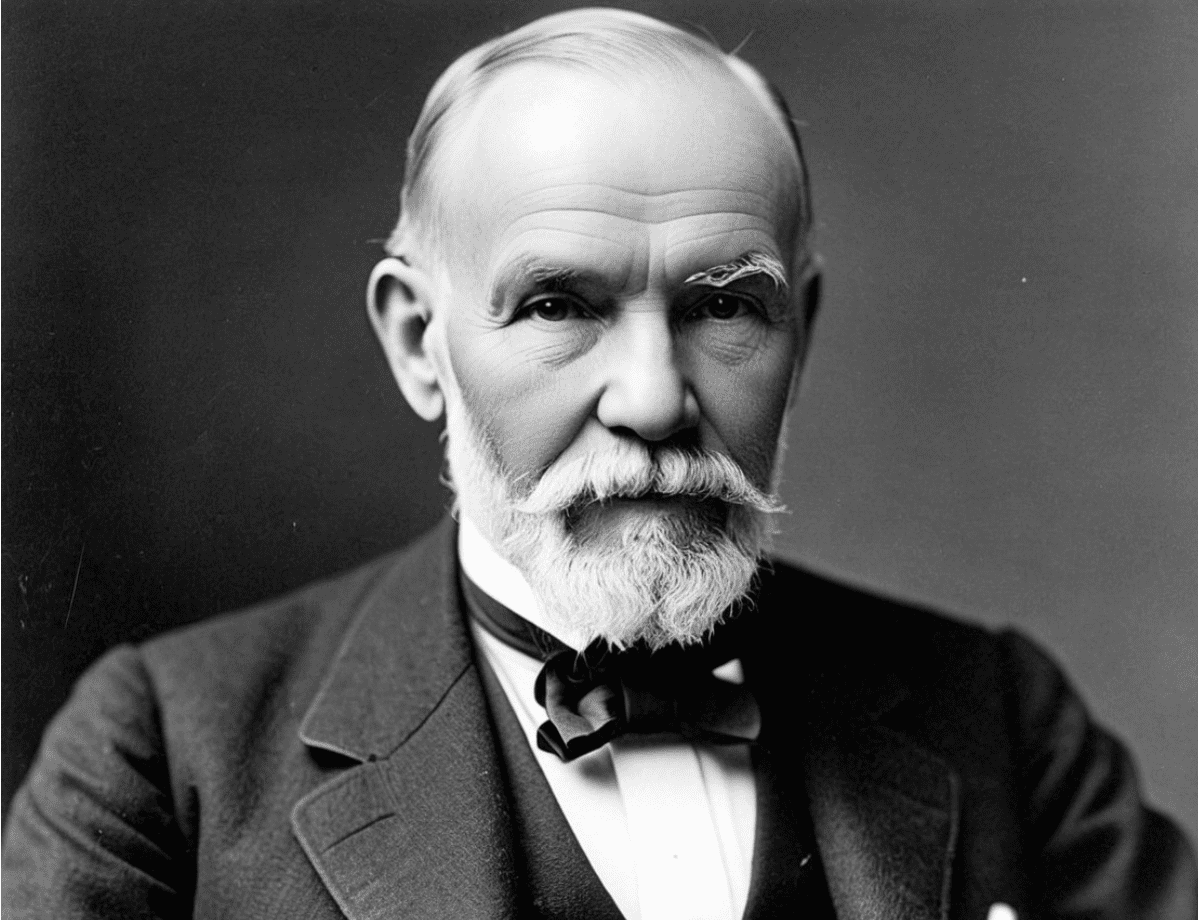

His name is familiar to anyone who has ever delved into sociology or philosophy. His contribution to the development of symbolic interactionism became the foundation for understanding how society shapes the individual, and how the individual, in turn, shapes society. Mead never published a single monograph in his lifetime, but his ideas became the bedrock of modern social psychology, the philosophy of mind, and pedagogy. Read more on ichicago.net.
Biography
George Herbert Mead was born on February 27, 1863, in South Hadley, Massachusetts, into a family where knowledge, morality, and civic responsibility were highly valued. His father was a Congregationalist minister, theologian, and professor who taught theology and was actively involved in missionary work. His mother came from an educated background, supported the women’s rights movement, and was considered an intellectual of her time. It was she who encouraged her son to read, think independently, and engage in philosophical reflection. This family environment gave Mead a strong moral and ethical foundation and shaped his inclination to analyze social life within a broad philosophical context. In his childhood, he showed a keen interest in the humanities and was deeply curious about questions of morality, religion, the meaning of human life, and social justice.
In 1879, he enrolled at Oberlin College in Ohio—one of the first American institutions to admit students regardless of race or gender. There, Mead studied literature, philosophy, and the natural sciences, and began to form his own worldview, which combined ethical values with intellectual skepticism and a belief in the power of education. After graduating, Mead taught and worked for a time before enrolling at Harvard University to continue his study of philosophy. A pivotal stage in Mead’s academic biography was his trip to Europe. In 1888, he traveled to Germany, where he studied philosophy, psychology, and sociology under the leading thinkers of the time.
Involvement in Chicago Circles
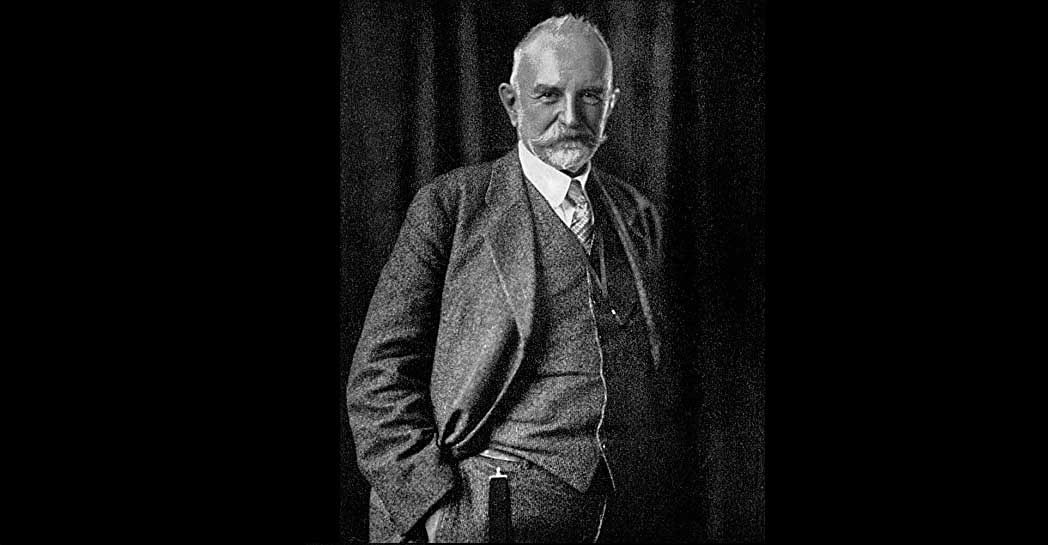
After moving to Chicago in 1894, George Herbert Mead became a professor of philosophy and psychology at the University of Chicago, where he worked for the rest of his life. It was there that an intellectual circle formed, which would later be known as the Chicago school of sociology—one of the most influential academic hubs of sociological thought in the early 20th century. Although Mead was not formally a sociologist, his ideas profoundly influenced his students and colleagues. His lectures on the philosophy of language, social psychology, and symbolic action became the foundation for the development of symbolic interactionism as a school of thought in sociology.
Mead actively participated in the discussions, academic circles, and pedagogical experiments taking place at the University of Chicago. He believed that education should be dialogical—a process of co-creating knowledge between student and teacher. In addition to his teaching activities, Mead was actively involved in Chicago’s philosophical societies and social reform programs. He believed in the practical power of philosophy not as abstract knowledge, but as a tool for social change. His participation in these environments helped Mead formulate key ideas that combined philosophy, psychology, sociology, and pedagogy into a unified vision of the human being as a social creation. Thanks to this, Chicago became more than just his workplace—it became the birthplace of new social thought, in which Mead played a central role.
Philosophical Ideas
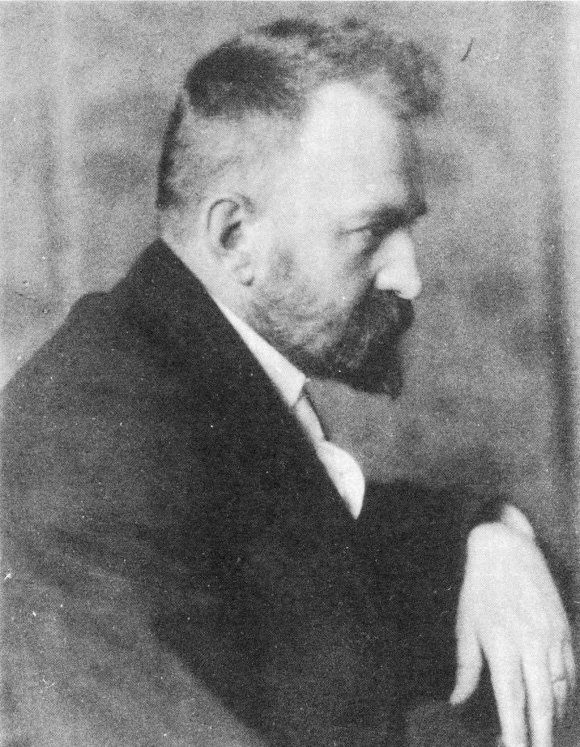
The central idea in George Herbert Mead’s philosophy is the understanding of the “self” as a social product, formed not in isolation, but in the process of interaction with others. He believed that an individual is not born with a pre-formed personality—they become a self only through participation in social life, through communication, the interpretation of symbols, and the adoption of social roles. This idea became the foundation of symbolic interactionism, one of the most influential schools of thought in 20th-century social psychology and sociology.
Mead believed that the formation of the “self” is a dynamic and open-ended process that continues throughout life. The individual constantly adapts to new roles and changes their self-conception. This is where their freedom and, simultaneously, their social dependence lie. Mead’s philosophy of experience is closely tied to American pragmatism: it focuses not on abstract concepts, but on the concrete actions and practices of interaction that create consciousness.
One of George Herbert Mead’s most original and influential contributions to the philosophy of mind and social psychology was his concept of the dual structure of the self, which he revealed through the distinction between the “Me” and the “I.” In Mead’s theory, the “Me” is the socialized self—the conscious, rational, disciplined aspect of our personality shaped by the social environment. It is what we absorb from our experiences with communication, learning, and interaction with others. In contrast, the “I” is the active, impulsive, and creative part of the personality that responds to situations in novel, unexpected ways. These two components are in constant dialogue. Through this approach, Mead made a fundamental contribution to understanding how a person is able to think, create, and redefine themselves.
Influence and Legacy
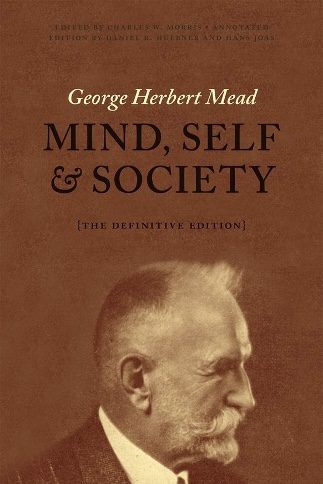
George Herbert Mead never published a major monograph during his lifetime, as he saw himself primarily as a teacher. His main work, “Mind, Self, and Society,” was published posthumously in 1934. The book was compiled by his students, notably Herbert Blumer, based on stenographic notes from his lectures at the University of Chicago. It was Blumer who coined the term “symbolic interactionism” to describe Mead’s key idea: that the self is formed through social interaction mediated by symbols.
Mead had a significant impact on the development of:
- Social psychology: particularly the concepts of roles, the “generalized other,” and intersubjectivity.
- Theories of socialization: his model of child development through play and games has become a staple in education textbooks.
- Progressive education: his ideas of “learning by doing” found practical application in the educational reforms of the early 20th century.
- Mass communication studies: his approach helped to understand how language, symbols, and interpretations create social reality.
- The philosophy of mind: Mead was one of the first to link the emergence of consciousness not to an internal essence, but to the process of interaction within society.
- The sociology of everyday life: his concept of the “self” as a process became a starting point for theorists like Erving Goffman, Peter Berger, and Thomas Luckmann.
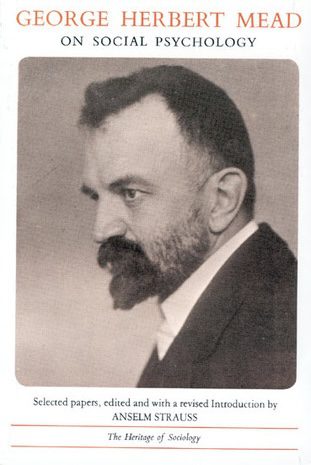
In the 21st century, during an era of digital socialization, George Herbert Mead’s ideas have become even more relevant. Social media, avatars, personal brands, and online identities all illustrate how the “self” is formed in the eyes of others and how the social environment becomes a tool for self-definition. People construct a “Me”—a social reflection of themselves—on social networks every day. Meanwhile, the “I” is expressed in the choices people make about how they present themselves, what content they share, and which roles they accept or reject. George Herbert Mead left behind an intellectual toolkit that allows us to analyze not only classic social structures but also the new forms of communities, communication, and identities of our time.