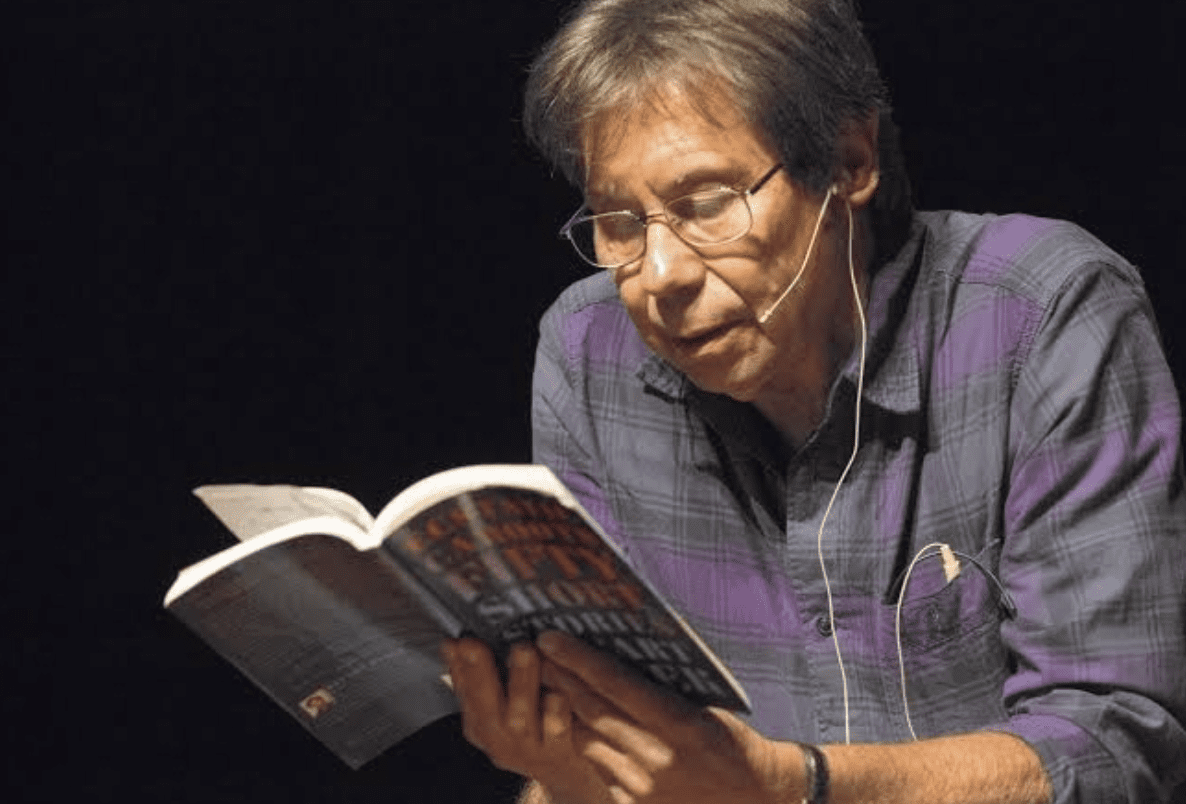

He is one of the most distinguished American writers of the late 20th and early 21st centuries. His work brilliantly merges a deep ethnic identity with universal themes of memory, love, and the search for self. Born in Chicago to Polish immigrant parents, he became the voice for a generation of authors committed to preserving their ancestors’ cultural heritage. Dybek entered American literature as one of the first writers of Polish descent whose work achieved widespread national recognition. More details are available at ichicago.
Biography
Poet and fiction writer Stuart Dybek was born in 1942 and grew up on the South Side of Chicago. His childhood was intrinsically tied to the city’s street life, which later became a major source of inspiration for his writing. Dybek’s father emigrated to the U.S. from Poland and worked as a mechanic at the International Harvester plant, while his mother was a truck dispatcher. Their family history combined a strong work ethic with the immigrant experience, profoundly influencing the future writer’s worldview. The childhood sights, sounds, and smells of these neighborhoods would later form the foundation of his literary world.
In 1959, Dybek graduated from St. Rita of Cascia Catholic High School. Education was the key that unlocked a broader cultural landscape for him: he earned a Master of Arts degree in literature from Loyola University Chicago and later a Master of Fine Arts (MFA) from the prestigious Iowa Writers’ Workshop. It was here that he honed his unique voice and developed a style that blended realistic description with a poetic vision.
For over three decades, Stuart Dybek taught English literature and creative writing at Western Michigan University. He not only mentored hundreds of students but also became a permanent faculty member of the university’s literary program in Prague. His pedagogical work has been widely recognized both in the U.S. and internationally. After stepping back from his main teaching career, Dybek accepted the position of Distinguished Writer in Residence at Northwestern University.

Literary Works
Dybek’s body of work spans both poetry and prose. He has published two collections of verse—Brass Knuckles (1979) and Streets in Their Own Ink (2004). His poetry is characterized by dense imagery and musicality, conveying the rhythm of the city and the intonations of oral language.
However, it is his fiction that brought the writer the most acclaim. His short story collection, Childhood and Other Neighborhoods, laid out the main themes of his later work: growing up, memory, and the landscape of his home neighborhoods. In The Coast of Chicago, he created a unified literary portrait of his native city, combining ethnic stories, urban scenes, and the intimate experiences of his characters. The book was recognized as a New York Times Notable Book and was included in the American Library Association’s “Notable Book of 2005” list.
The novel-in-stories, I Sailed With Magellan, holds a special place, with the author weaving autobiographical motifs into a fictional narrative. Selected stories from his body of work have appeared in the Best American Short Stories anthology (2004). Subsequent collections—Paper Lantern: Love Stories and Ecstatic Cahoots: Fifty Short Stories—demonstrated his mastery of the short form, where Dybek achieved particular expressiveness.
His work has been regularly featured in leading literary journals and magazines—including Harper’s, The New Yorker, Atlantic Monthly, Poetry, Tin House, Ploughshares, The Magazine of Fantasy and Science Fiction, and TriQuarterly. This exposure has solidified his status as one of the most prominent contemporary literary figures.
Critics often compare Dybek to writers like Saul Bellow and Theodore Dreiser. Like them, he creates literature deeply rooted in a specific place and its landscape. For Dybek, however, the city takes on a unique metaphorical significance: it is not merely a backdrop but an autonomous character that influences the destinies of his protagonists. His texts are a seamless blend of ethnic memory, cultural heritage, and individual experience. He was among the first to address Polish-American identity in literature, reflecting the lives of those typically overlooked by mainstream culture. Dybek’s work is distinguished by a kind of “sliding realism,” where dreams and imagination exist on equal footing with the harsh details of urban life. This fusion makes his writing simultaneously candid and poetic, honest and elevated.

Themes and Style
Stuart Dybek’s work is characterized by a deep connection to the space and time that shaped his worldview. He transformed the streets of Little Village and Pilsen into main characters in his stories. For Dybek, the city is not just scenery but a living organism that impacts people’s lives, dreams, and fates. His prose is often referred to as “urban lyricism” because he skillfully combines social realism with poetic imagery.
The primary themes in his works include childhood, the search for identity, memory, and cultural heritage. The author illustrates how family stories, ancestral language, and traditions forge a sense of belonging within a diverse metropolis. At the same time, he doesn’t idealize the ethnic experience; he honestly portrays generational conflicts, language barriers, and the contradictory nature of the immigrant’s journey.
His style has a noticeable musicality: the rhythm of his prose often resembles a jazz improvisation, harmoniously intertwined with everyday narration. He easily shifts from realistic scenes to elements of magical realism, where city streets become a space of fantasy and symbols. Dybek experiments with form: his “novel-in-stories” I Sailed With Magellan links separate narratives into a single mosaic that conveys a sense of life’s continuity. Critics note a balance in his prose between simplicity and depth, between specific details and universal motifs. His protagonists are ordinary Chicago residents, but through their experiences, Dybek touches upon themes that resonate with every reader: love, loss, loneliness, and the desire to be heard.

Awards and Recognition
Dybek’s literary talent has earned him numerous accolades. In 1985, he received the prestigious Whiting Award, and in 1995, the PEN/Malamud Award for his contribution to the short story form. He has also been honored with the Lannan Prize, a Guggenheim Fellowship, and the O. Henry Award. His highest recognition came on September 25, 2007, when he was awarded the MacArthur Fellowship, famously known as the “genius grant.”
These awards testify not only to his literary skill but also to the importance of his work for American culture. He has become a symbol of how personal stories and local narratives can transcend ethnic boundaries and resonate with a wide readership.
Stuart Dybek is a writer whose work retains the imprint of his childhood and youth in Chicago, yet simultaneously tells stories comprehensible to any reader. His books serve as a literary map of the city, created through the eyes of someone who sees beauty in the mundane, grandeur in simple things, and poetry in everyday life. For the Polish-American community, he has become a pivotal figure who elevated the ethnic experience to the level of great literature. For American culture at large, he is recognized as a master of the short story and a chronicler of a city that, in his works, transforms into a universal space of memory and imagination.