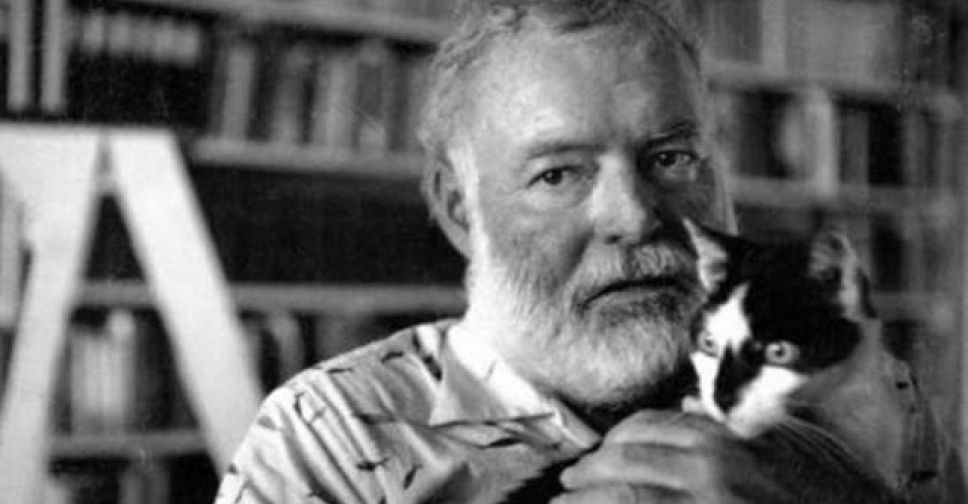

Ernest Hemingway’s works are decades old, but they do not lose their relevance for the modern generation. The writer reflected many events from his life in the novels. “A man can be destroyed, but not defeated” was the motto of Ernest Hemingway’s life. He was awarded the Nobel Prize for outstanding contributions to literature, according to “ichicago.net“.
Childhood and youth of Ernest Hemingway
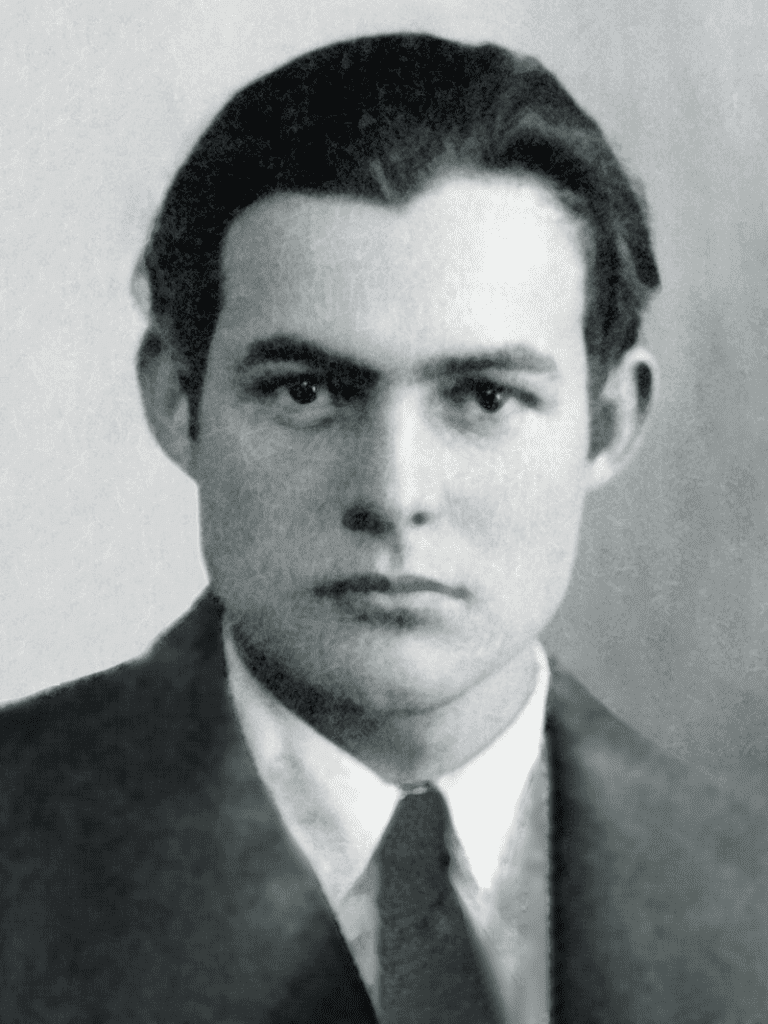
He was born on July 21, 1899 in the Village of Oak Park, located near Chicago. The boy grew up in a wealthy family. His parents tried to instill in the child cultural values from an early age.
The boy was named after his grandfather, but he never liked his own name. His father Clarence Hemingway was a doctor and admired nature. He tried to pass his delight for animals and birds on to his son, so he often took Ernest with him to the forest.
Ernest’s Mother Grace Hall taught music and sang in the church choir. Little Ernest was also taught music and singing, although he was not enthusiastic about it. However, the writer kept his love for music and painting throughout his life.
The boy received his secondary education at the Oak Park school. Even during his studies, he paid great attention to the study of language and literature and even tried his hand at the school newspaper “Trapeze” and the magazine “Tabula” for the first time.
In his school years, Ernest loved to read and he was particularly fascinated by the works of Mark Twain and Shakespeare. After leaving school, the young man decided not to get a higher education. Instead, he moved to Kansas and started working at the local newspaper “Star”.
The First World War in the life of the writer
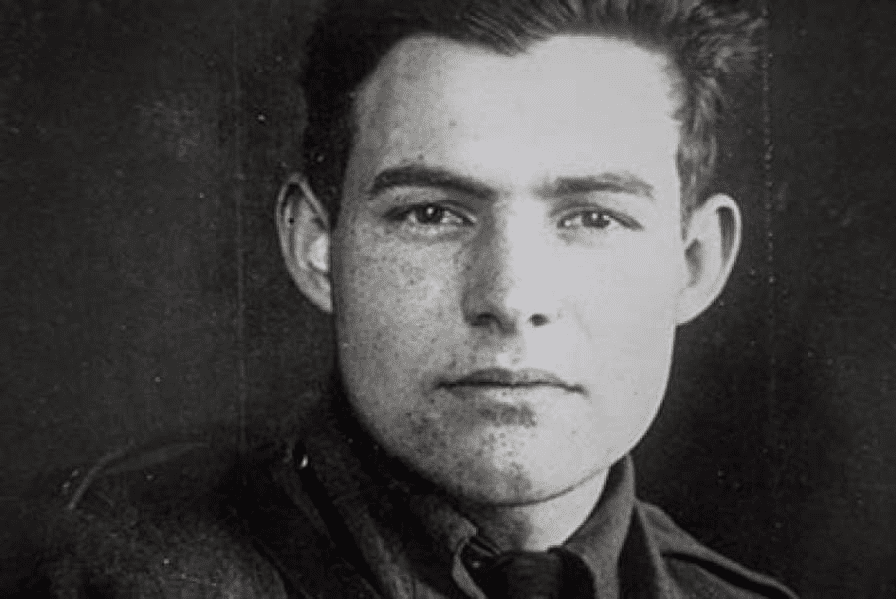
From a young age, Ernest Hemingway dreamed of serving in the army, but could not undergo a medical examination due to poor eyesight. Everything changed with the beginning of the First World War. He was accepted for service as an ambulance driver.
In July 1918, Ernest was seriously wounded while returning with chocolate and cigarettes to the soldiers at the front. 237 shards were counted in the young man’s body. He was urgently hospitalized in Milan. Hemingway stayed in the hospital for several months and underwent serious knee surgeries. After recovery, he remained at the hospital to help the wounded, for which he received a silver military medal.
At the hospital, Ernest Hemingway fell madly in love with the nurse Agnes von Kurowsky, but she did not reciprocate the young man. An unhappy first love affected the writer’s subsequent relationships with women.
The beginning of a literary biography
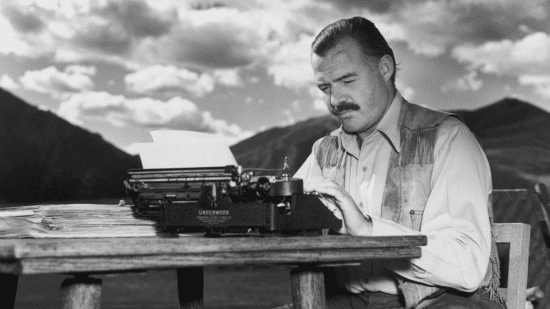
In 1919, Hemingway returned home to the USA with the honorary status of a hero. After a short stay at home, the young man decides to move to Paris. It was from this city that his literary work began.
Paris of the 1920s attracted creative personalities. Writers, artists and poets from all over the world liked the city. In the capital of France, Ernest Hemingway firmly decided to become a writer.
He got to know famous artists of the modernism era – Fitzgerald, Gertrude Stein and Ezra Pound. For a long period of time, they became idols for a young beginner. Ernest Hemingway actively studied their work, but continued to search for his own style.
Under the influence of the events of the post-war period, political beliefs began to form in the writer. As a journalist at several American newspapers, he actively traveled to European countries. In Italy, Hemingway learned what fascism was and hated it for the rest of his life.
The Greco-Turkish War helped the writer to find his own place in life. As a military correspondent, the journalist sent notes to American publications. There, he saw the war from a completely different side and defined for himself the main slogan in his literary work – “to write the merciless truth about life.”
After returning from the war, Ernest Hemingway decides to put an end to journalism forever. The first book authored by the writer was the collection of short stories “In Our Times”. All stories are united by a common idea and theme. Here for the first time the concise and laconic personal style of the author manifested itself.
Later, as a continuation of the collection, the novel “Fiesta” is published, where the issue of the Lost Generation is raised.
A novel that brought world fame
The work that brought international recognition and world fame to the writer was the novel “A Farewell to Arms!”. In the work, Ernest Hemingway reveals the feelings that a person experiences in the war and, at the same time, contrasts them with love – the best human feeling.
The main theme of the novel is the love story of Lieutenant Henry and the nurse Catherine, who appear in the images of Romeo and Juliet during the First World War. The leitmotif runs through the work with a scarlet thread, presupposing the loss of everything precious in a person’s life.
It is worth adding that the writing of the novel was influenced by events in Ernest Hemingway’s personal life. His father’s suicide and his wife’s difficult childbirth became a painful loss for him.
During the Second World War, the writer devotes himself to the fight against fascism, which he hated fiercely. Together with several friends Ernest Hemingway creates a private organization that fights against the fascist regime. On a yacht, they patrolled the coast of the Atlantic Ocean, trying to find German submarines. Essays from wartime became the basis of the book “Men at War”.
The turning point in the creative life of Ernest Hemingway was the year 1952. In this year, he wrote the novella “The Old Man and the Sea”, which, without exaggeration, became the main work of his life. In the novella, the writer reflects on the life of a person and their place in the universe.
The work has an interesting and long history of writing. Back in 1936, Ernest Hemingway published an essay in Esquire magazine that told about the real event that took place in the Gulf Stream. The fisherman managed to catch a huge fish. However, the fish pulled the boat far out to sea. When the man was found, almost nothing remained of his catch.
Initially, the writer intended to write a voluminous novel, which would tell about the life of a fishing village and its inhabitants. However, later the novel was transformed into a philosophical novella about a man and the sea.
The last years of Ernest Hemingway’s life
The years 1952-1954 became the period of international recognition of the writer’s work. He was awarded the Nobel Prize and the Pulitzer Prize for Fiction.
During the following years, Ernest Hemingway travels a lot across European countries. However, Cuba became his native home, where he always returned.
The last work in the heritage of the writer was the book of memories “A Moveable Feast”, which tells about the atmosphere of the artistic life in Paris at the beginning of the 20th century.
In the last years of his life, Ernest Hemingway often suffered from illnesses. Following the example of his father, he even attempted suicide several times, due to which he was treated for a long time for mental disorder and severe depression.
After treatment, on July 1, 1961, the writer returned to the estate in Cuba. In the morning of the next day, taking a carbine in his hands, he took his life.
It should be noted that Ernest Hemingway lived a rich and complex life. His parents had a great influence on his personality, who dressed the boy in dresses until the age of seven, because they really wanted a daughter. Consequently, the writer spent his whole life trying to assert his importance to his parents and the world, which eventually urged him to commit suicide.
However, Ernest Hemingway left behind many works that became classics of world literature and favorite novels of many generations.