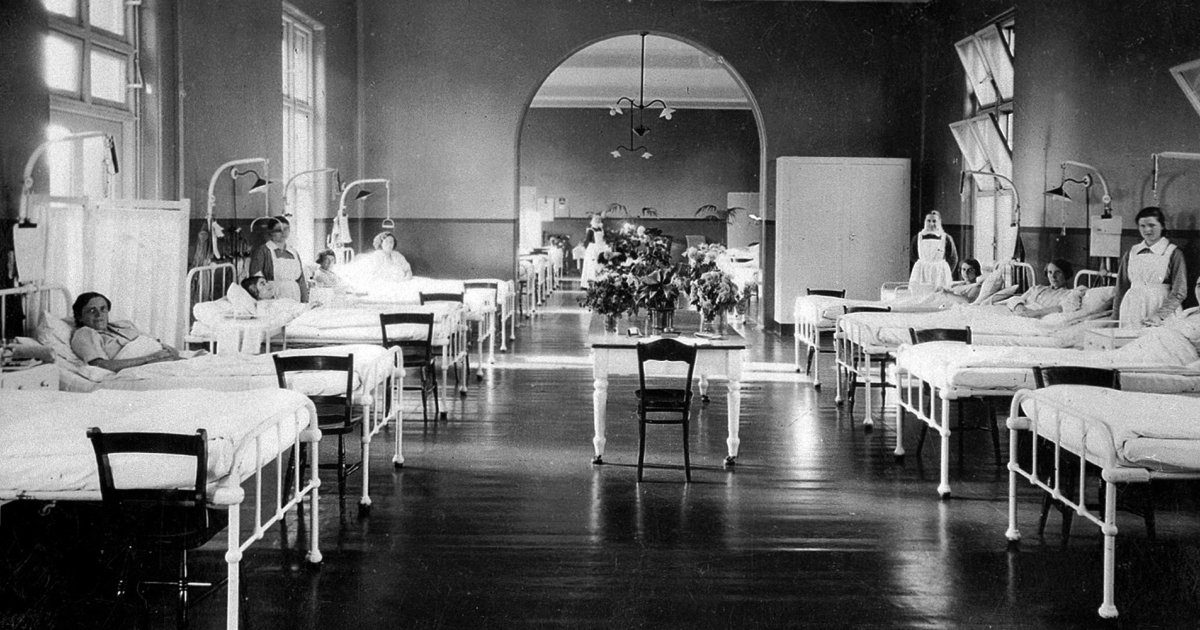

In 2020, the world was shaken by the coronavirus epidemic, with numerous cases being recorded in the United States. Chicago has not seen such unexpected events since the 19th century when it took the city a very long time to recover from typhus and cholera outbreaks, informs ichicago.net.
What are the dangers of typhoid fever?
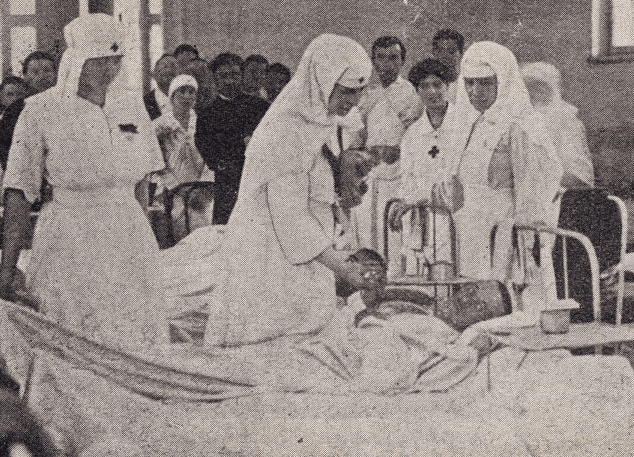
Typhoid fever is an acute infectious disease caused by the Salmonella Typhi. The condition starts with a fever that lasts 5-6 weeks. The patient exhibits signs of general intoxication, as well as a skin rash, an enlarged liver, spleen and small intestinal lymphatic system.
It was German scientist Karl Eberth who made the initial discovery of the causative agent of typhoid fever. His colleague, bacteriologist Georg Gaffky, proved that the disease is transmitted through fluids and not through the air.
However, Almroth Wright, a British bacteriologist was the one to develop a vaccine against typhoid fever. He worked for the British Armed Forces and developed vaccines. One of the greatest achievements of the scientist was the invention of a typhoid fever immunization method. In particular, the bacteriologist was effective in combining cellular and humoral immunity with cells against pathogenic organisms.
Thanks to Almroth Wright’s perseverance, 10 million doses of vaccines were created for the army at the beginning of World War I. As a result, it lowered the death rate among soldiers from diseases not related to injuries.
First cases of typhoid fever in Chicago
The first case of typhoid fever was recorded in Chicago in 1891. In a short period of time, the disease claimed the lives of 2,000 people. Authorities and residents in Chicago were particularly worried since the city was scheduled to host the 1893 World’s Columbian Exposition, and the disease’s rapid spread put at risk its opening.
Every residence where the disease’s source was found had a warning card placed on it. At the same time, a physician from the Department of Health was notified. The supervising doctor instructed families on how to properly disinfect their homes, eliminate parasites and prevent the spread of typhoid infection.
In 1892, William Sedgwick, a biology professor at the University of Massachusetts, published an article in which he explored the connection between typhoid fever transmission and water contamination. The professor emphasized the need to prevent sewage contamination of the water supply system.
Recognizing the connection between contaminated water and the spread of typhus, Chicago authorities did everything they could to guarantee that the Columbia exhibition participants had access to clean water.
How did people deal with typhoid fever in Chicago?
To combat the disease’s recurrent outbreaks, the city decided to entirely reconstruct the water supply system. So, in the 1850s, Chicago saw the installation of the first municipal sewer system in the United States. However, in order to implement it, buildings needed to be raised to a higher level.
However, the invention did not fully fix the problem, as the sewer system continued to mingle with the river that poured into the lake.
Another option implemented by city officials was to excavate tunnels beneath the lake’s bottom to enable the supply of clean water from marine water intakes. However, as Chicago’s population grew, sewage began to enter the water intakes.
The practice of boiling and filtering water for consumption was also widely promoted among the public. The next step in easing Chicago’s water problem was the construction of the massive Sanitary and Ship Canal. The main purpose of the project was to redirect the Chicago riverbed so that its waters flow into St. Louis instead of Lake Michigan. However, the canal did not operate until 1901.
Local authorities were well aware that Chicago desperately needed clean water, and its cleanliness had a direct impact on the spread of typhoid disease. Professor Huff created a comprehensive map of water intake from the far depths of the lake, which was very useful to local residents.
In a brief period, the number of new cases of typhoid fever fell dramatically in comparison to other major cities such as New York, Boston and Philadelphia.
All procedures combined produced the desired effect, and diseases transmitted by contaminated water were eliminated. However, there were recurrent outbreaks of other transmissible diseases in Chicago, including diphtheria, dysentery, scarlet fever and smallpox, that killed thousands of people.
The poor were particularly affected by diseases due to a lack of access to medicine and sanitary infrastructure, as well as the city’s overpopulation. Disease control increased significantly until after the turn of the century when vaccines were developed and sanitary conditions and nutrition improved.
The story of Typhoid Mary
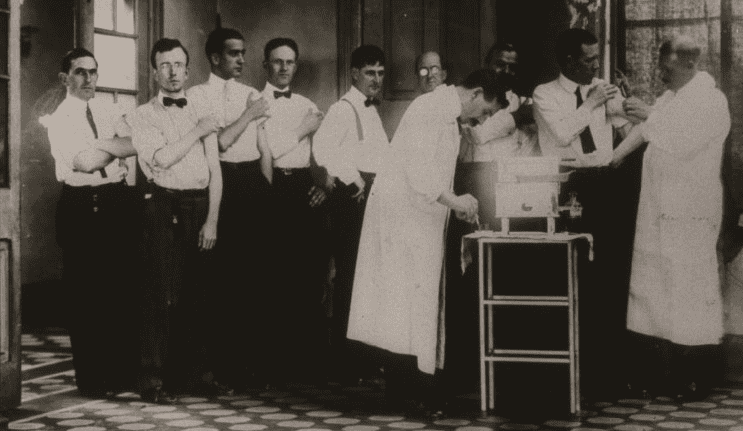
Mary Mallon was the first healthy carrier of typhoid fever in the United States, which is why she received the nickname Typhoid Mary. She had personally caused several outbreaks of the disease.
Mary Mallon was born on September 23, 1869, in Ireland. The girl’s family subsequently emigrated to America. As an adult, Mary decided to become a chef since she possessed culinary skills and wanted to make money.
In the summer of 1906, Charles Warren, a New York banker, went to a country residence with his family for a vacation. Mary Mallon was employed to cook for their summer holiday. After some time, one of the banker’s daughters fell ill with typhoid fever. Later, Mrs. Warren and all of the servants were diagnosed with the disease.
Both investigators and doctors tried to determine the reason for the outbreak. The family sought assistance from civil engineer George Soper, who had previously dealt with typhoid outbreaks. He suspected that the recently hired chef, Mary Mallon, was responsible for the spread of the disease.
George Soper was dedicated to researching the woman’s life and tracked Mary’s work back to 1900. As it turned out, epidemics of typhoid disease followed her from one occupation to another. George Soper tried to talk to the woman and urge her to willingly do tests to see if she was a typhoid fever carrier. Mary Mallon, on the other hand, was adamantly opposed to any medical intervention because she never suffered from typhoid disease and was righteous in her own opinion.
The Mary Mallon case
Under force, the officers put the woman into an ambulance and drove her to the hospital. It was discovered that Mary Mallon had typhoid bacilli. The woman was brought to North Brother Island by the Department of Health and was fully isolated.
The woman was held in captivity for a long time without trial and against her will. At the same time, it did not break any existing laws of the time. Mary Mallon was eventually released, but under one condition: she would never work as a cook again.
The woman was not deterred by the prohibition, and she found work in a maternity hospital under the pseudonym Mrs. Brown. In early 1915, typhoid disease broke out at the maternity hospital. As a result, 25 people fell ill, with two passing as a result of the disease. Mary Mallon was once again the cause of the outbreak.
This time, the cook did not get away with a minor reprimand because she was fully aware that she was a healthy carrier of typhoid fever. She was again secluded on the island, where Mary Mallon remained for the next 23 years. On the island, the woman helped at a tuberculosis hospital.
In 1932, the prisoner suffered a stroke that confined her to her bed. Mary Mallon remained in the hospital for another six years following her disease.