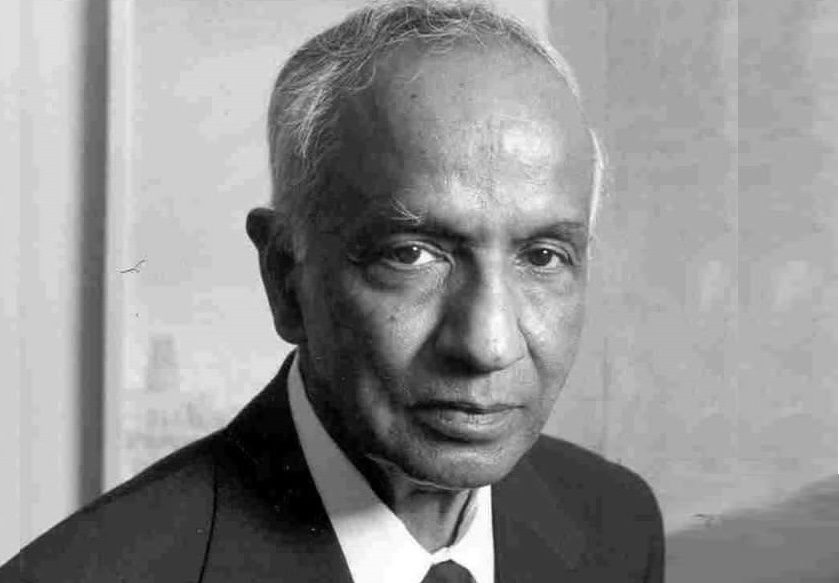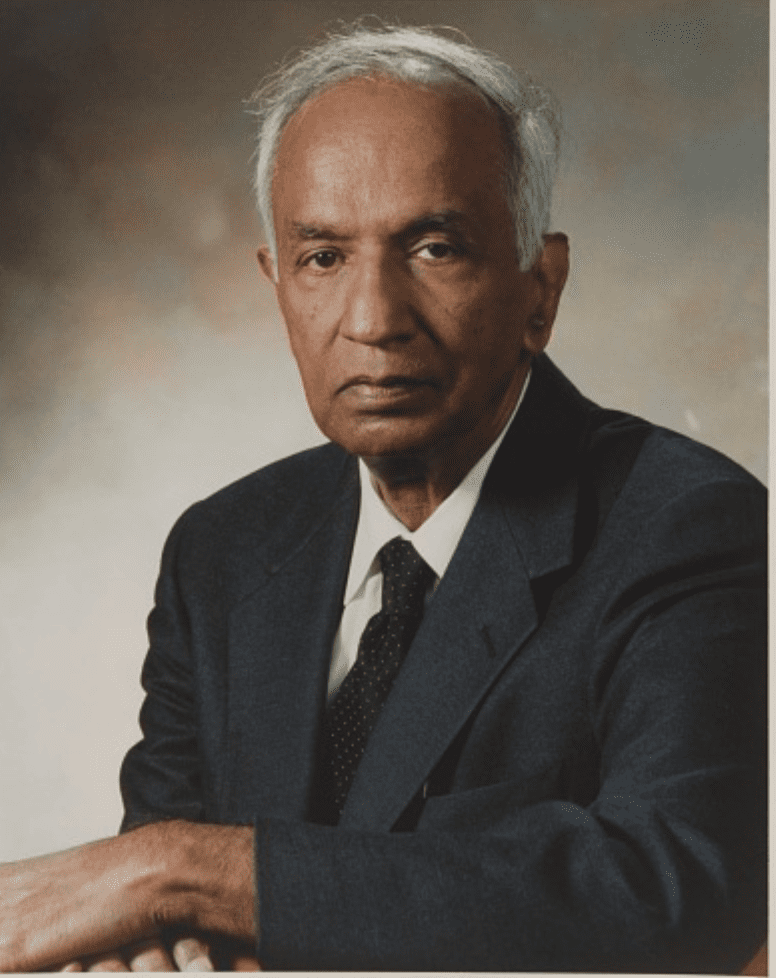

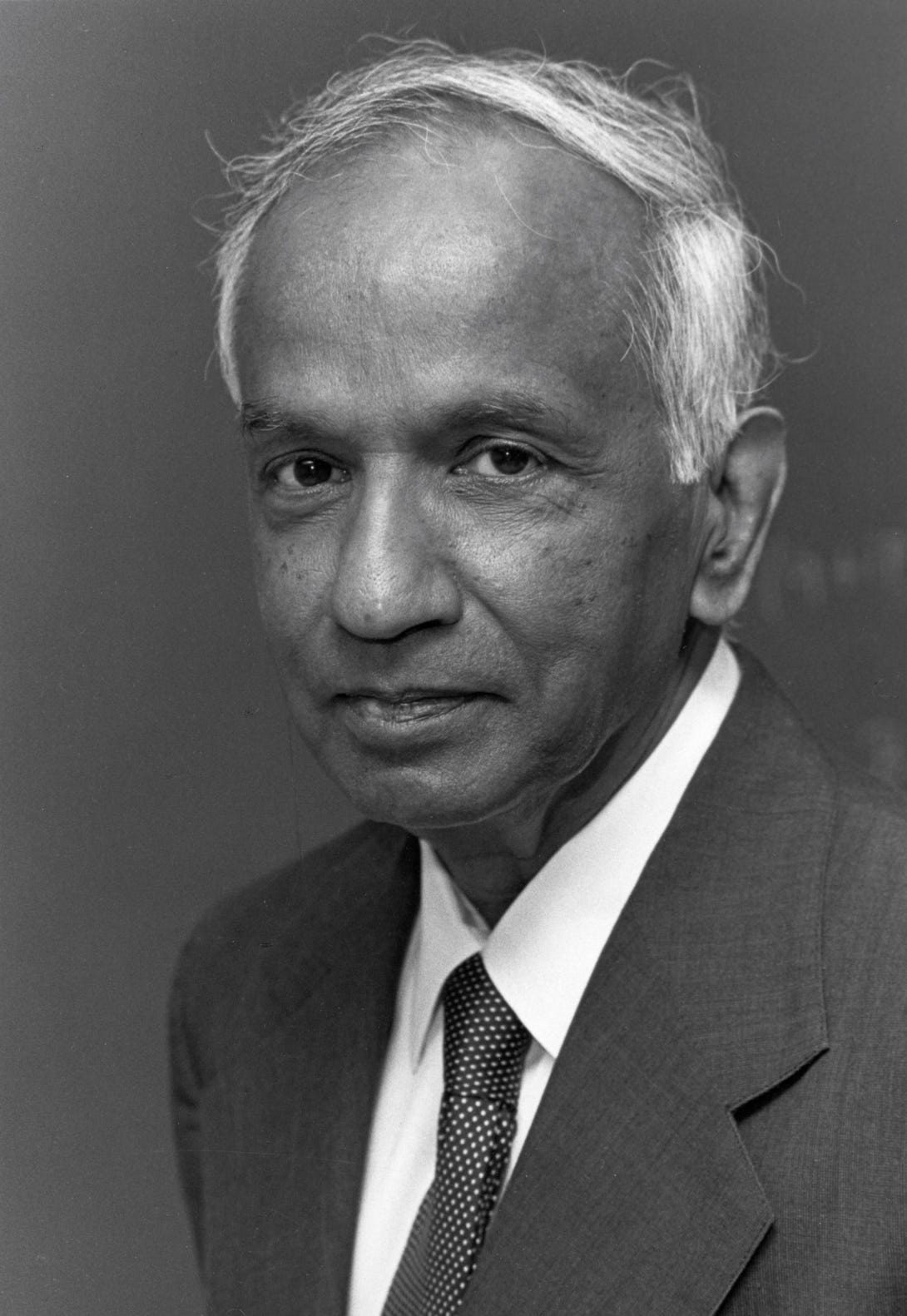
A renowned Indian-born astrophysicist and Nobel laureate in Physics, he forever changed our understanding of stellar evolution. His work blended deep theoretical insight, mathematical precision, and a boldness of thought that was far ahead of its time. Read more at ichicago.net.
Biography
Subrahmanyan Chandrasekhar was born on October 19, 1910, in Lahore, then part of British India. His family belonged to a well-educated and cultured elite: his father was a high-ranking official in the railway department, and his mother was highly educated with a keen interest in art and literature. A major influence on young Chandrasekhar’s worldview was his uncle, Sir Chandrasekhara Venkata Raman, who won the Nobel Prize in Physics in 1930 for discovering the scattering of light, an effect later named the Raman effect. This served as a powerful source of inspiration for the future scientist, confirming that an Indian could achieve the highest recognition in global science.
Chandrasekhar was homeschooled for his early education, where he showed an exceptional aptitude for mathematics, logic, and classical literature. As a teenager, he began reading the works of European physicists like Max Planck, Albert Einstein, and Arthur Eddington. In 1925, he enrolled at Presidency College in Madras, where he excelled in the physics program. In 1930, after receiving a scholarship from the Government of India, Chandrasekhar set off for Cambridge University to become a graduate student under the distinguished British astrophysicist Ralph Fowler. It was during the sea voyage to Europe that he began the initial calculations that would lay the foundation for the future “Chandrasekhar limit.” Armed with his knowledge of quantum mechanics and special relativity, he was the first to seriously consider what happens to stars after they exhaust their fuel. His arrival at Cambridge immediately drew attention. Despite his youth, he stood out for his deep analytical thinking, modesty, and self-discipline. However, this period also marked his first clash with the scientific establishment, as his conclusions challenged the prevailing theories of “eternal stellar stability.” Chandrasekhar worked diligently, published his first scientific papers, and gradually established himself as an original thinker capable of merging classical theory with the latest discoveries in quantum physics.
Discovering the Chandrasekhar Limit
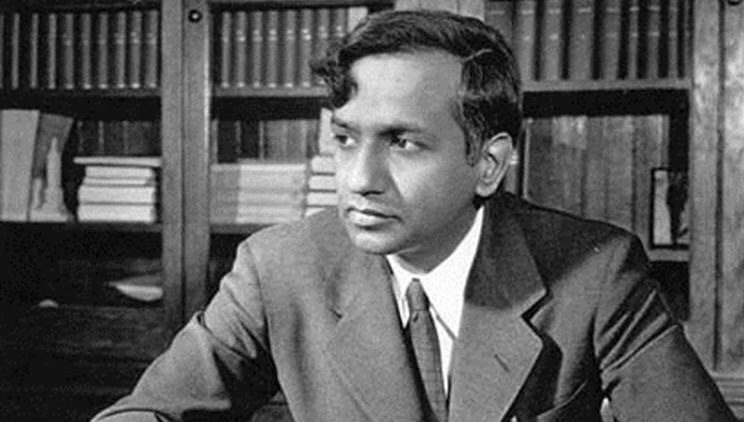
Subrahmanyan Chandrasekhar’s most significant scientific contribution is the so-called “Chandrasekhar limit”—the theoretical maximum mass for a stable white dwarf, calculated to be about 1.44 times the mass of the Sun. This discovery, made when he was just 20 years old during his 1930 sea voyage from India to Great Britain, laid the foundation for our modern understanding of how stars die.
Chandrasekhar investigated the behavior of matter under extreme conditions inside white dwarfs—the dense remnants of stars that have ceased thermonuclear fusion. Using the principles of quantum mechanics and special relativity, he proved that electron degeneracy pressure could not withstand the force of gravity if a star’s mass exceeded a certain threshold. In such a case, a white dwarf could not exist as a stable object; it would inevitably collapse further. This conclusion was revolutionary. It meant that more massive stars didn’t just shrink—they were destined to become neutron stars or even black holes.
However, instead of acclaim, the young researcher faced fierce resistance from the scientific community. His most famous critic was Arthur Eddington, one of the most influential astrophysicists of the era, who publicly ridiculed Chandrasekhar’s calculations at a Royal Astronomical Society conference in 1935. Eddington argued that such “absurd” stellar behavior was unacceptable, believing it violated the accepted harmony of nature. Despite the public humiliation and isolation, Chandrasekhar did not abandon his convictions. He continued to work, publish papers, and develop new theoretical models. It was only decades later, with the discovery of neutron stars and advancements in general relativity, that his theory received full experimental confirmation.
Scientific Career in the USA
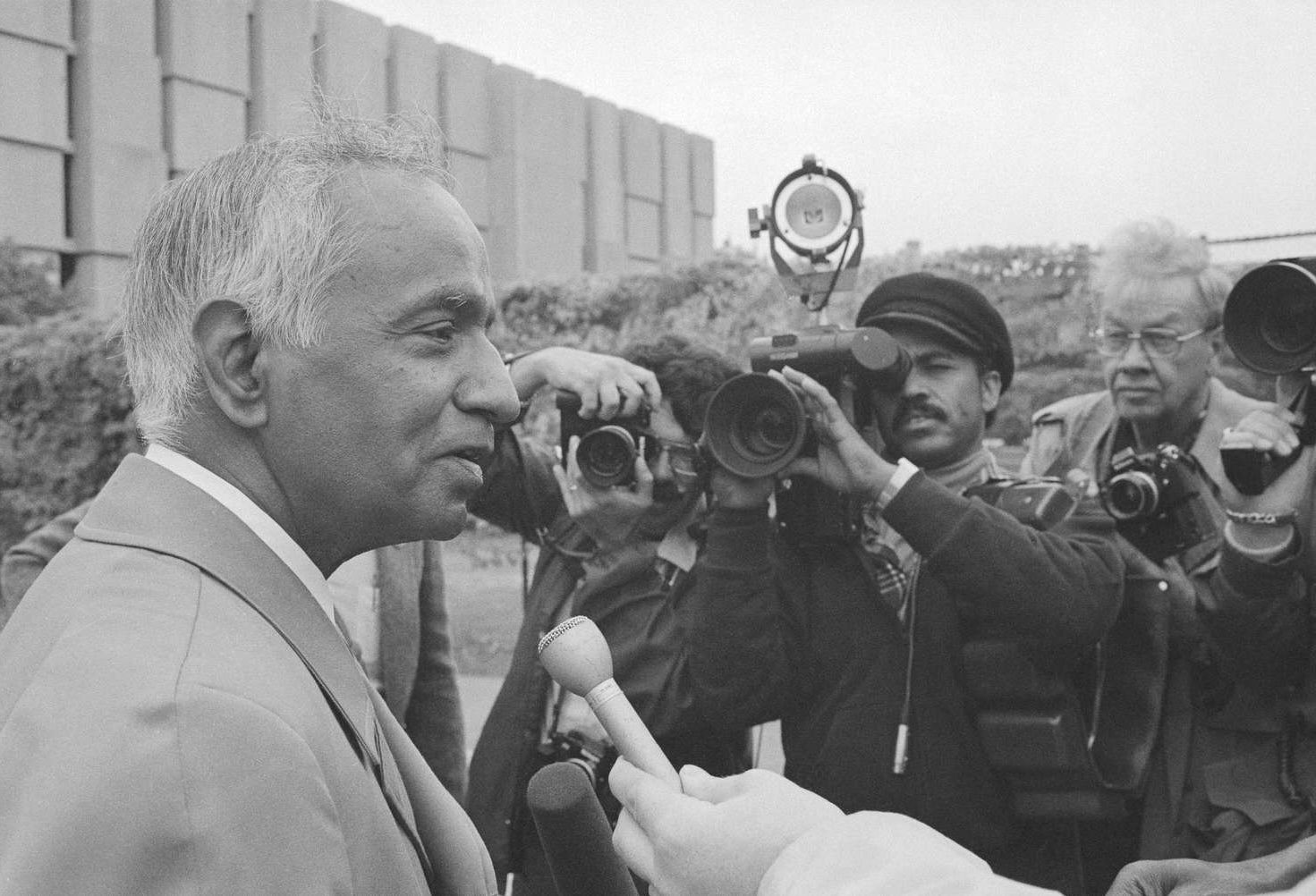
In 1937, after a period of scientific isolation in Great Britain, Subrahmanyan Chandrasekhar accepted an invitation to join the University of Chicago, one of the leading scientific centers in the United States. This move proved to be pivotal: Chicago became his home and the backdrop for a brilliant scientific career that spanned over half a century. Here, he not only conducted his research but also mentored a new generation of talented scientists. At Chicago, Chandrasekhar found complete academic freedom and scientific recognition. He led the theoretical astrophysics department at the Enrico Fermi Laboratory and worked at the university’s observatory. His lectures were famous for their depth and clarity, and his standards for students were legendary. For many young scientists, studying under Chandrasekhar was both an intellectual challenge and an honor.
Chandrasekhar’s scientific interests were remarkably broad. He delved into the kinetic theory of gases and statistical mechanics, radiative transfer in stellar atmospheres, the stability of star systems, general relativity and its applications in astrophysics, the behavior of fluids in gravitational fields, and the structure and dynamics of black holes. His monographs, each dedicated to a specific scientific topic, deserve special recognition. Chandrasekhar meticulously worked through the material, spending 10 to 15 years on a single book, always aiming to create a model of scientific precision and logic. His books have become classics and are still cited in scientific literature today.
In 1983, Subrahmanyan Chandrasekhar was awarded the Nobel Prize in Physics, which he shared with William Fowler. The prize was awarded for his “theoretical studies of the physical processes of importance to the structure and evolution of the stars.” Outside of his academic work, Chandrasekhar also served as the editor of the prestigious “Astrophysical Journal” from 1952 to 1971, where he established high standards of peer review and scientific integrity.
Scientific Legacy
Chandrasekhar is remembered not just as a scientist but as a model of scientific ethics and self-discipline. His approach—a deep dive into a complex problem, a systematic study of all its facets, and mathematical rigor—became the gold standard for many researchers.
Throughout his career, he mentored dozens of distinguished scientists, many of whom became professors and leaders in their fields. He demanded excellence from his students but always remained open to questions and discussions. His influence as a teacher was felt not only in the academic circles of the United States but across the global scientific community. His life and scientific journey prove that persistence and intellectual honesty can overcome the greatest barriers—be they cultural, national, or scientific.
The most prominent tribute to his contributions was the creation of the Chandra X-ray Observatory, launched by NASA in 1999. The name “Chandra” is a nod to his name but also means “moon” in Sanskrit, symbolically highlighting his connection to the cosmos.