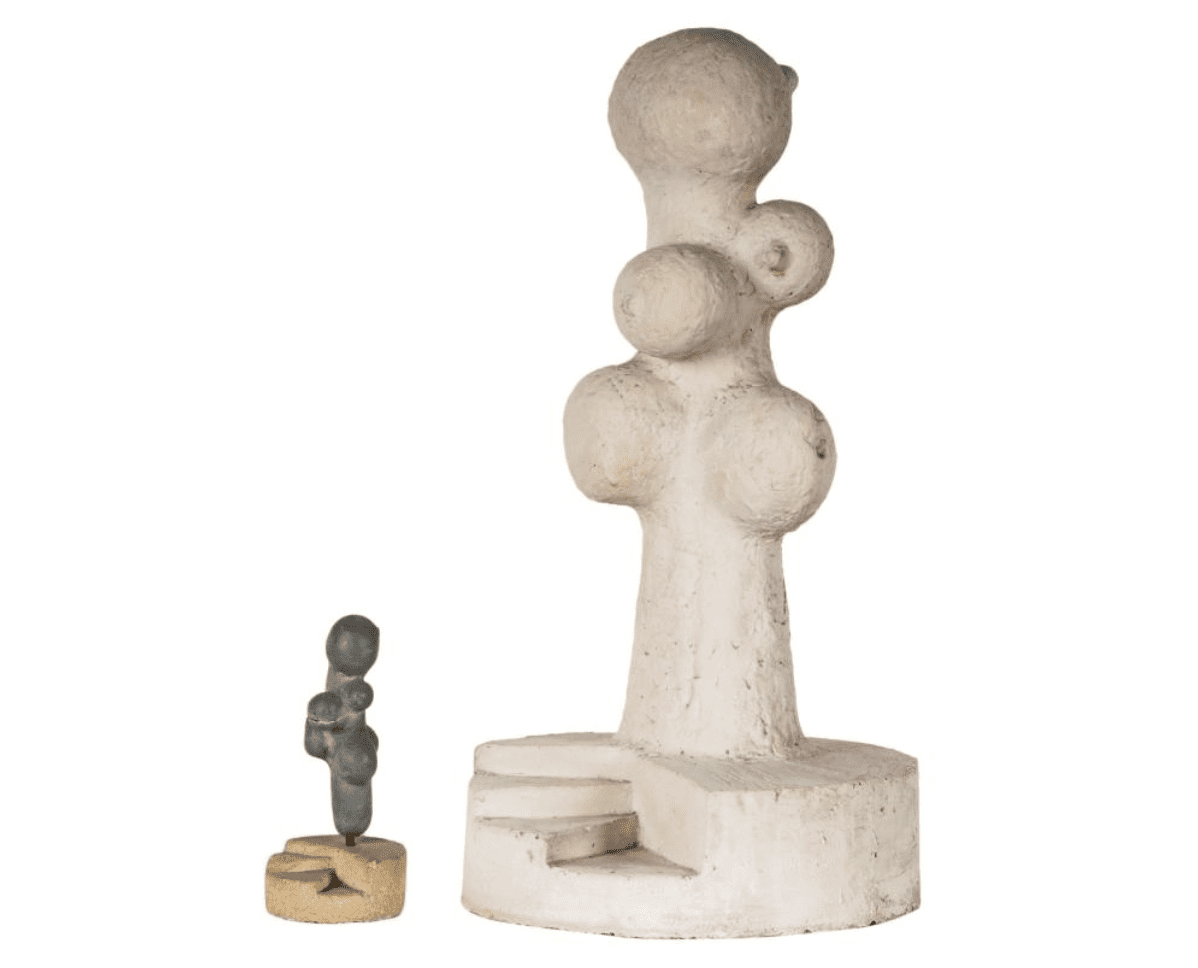

Cosmo Campoli was a prominent sculptor known for his figurative works that merged themes of birth and death, alongside the experimental symbolism of birds and eggs. His art stands out for its synthesis of surrealist, expressionist, and mythological approaches, all of which reflected profound existential questions about the human condition. Read more on ichicago.
Biography
Cosmo Campoli was born on March 21, 1922, on a farm in Indiana near the Illinois border. From childhood, he displayed a tendency toward “active” sculpture, pouring energy and vitality into every piece, primarily in clay. After serving in World War II, Campoli enrolled in the School of the Art Institute of Chicago (SAIC), where he studied alongside G.I. Bill veterans, including Leon Golub, George Cohen, and Theodore Halkin. They were united by a shared vision: to create expressive, surrealist figurative sculpture that conveyed the horrors of war and the uncertainty of the nuclear age.
In 1950, Campoli, John Kearney, and Golub co-founded the Contemporary Art Workshop on Rush Street in Chicago—an exhibition space that supported young artists and fostered the local art scene. Campoli was described by contemporaries as a “universally beloved” artist, full of energy, intuition, and creative imagination. Among those who helped popularize his work were art dealer Allan Frumkin, curator Peter Selz, and critic Franz Schulze.
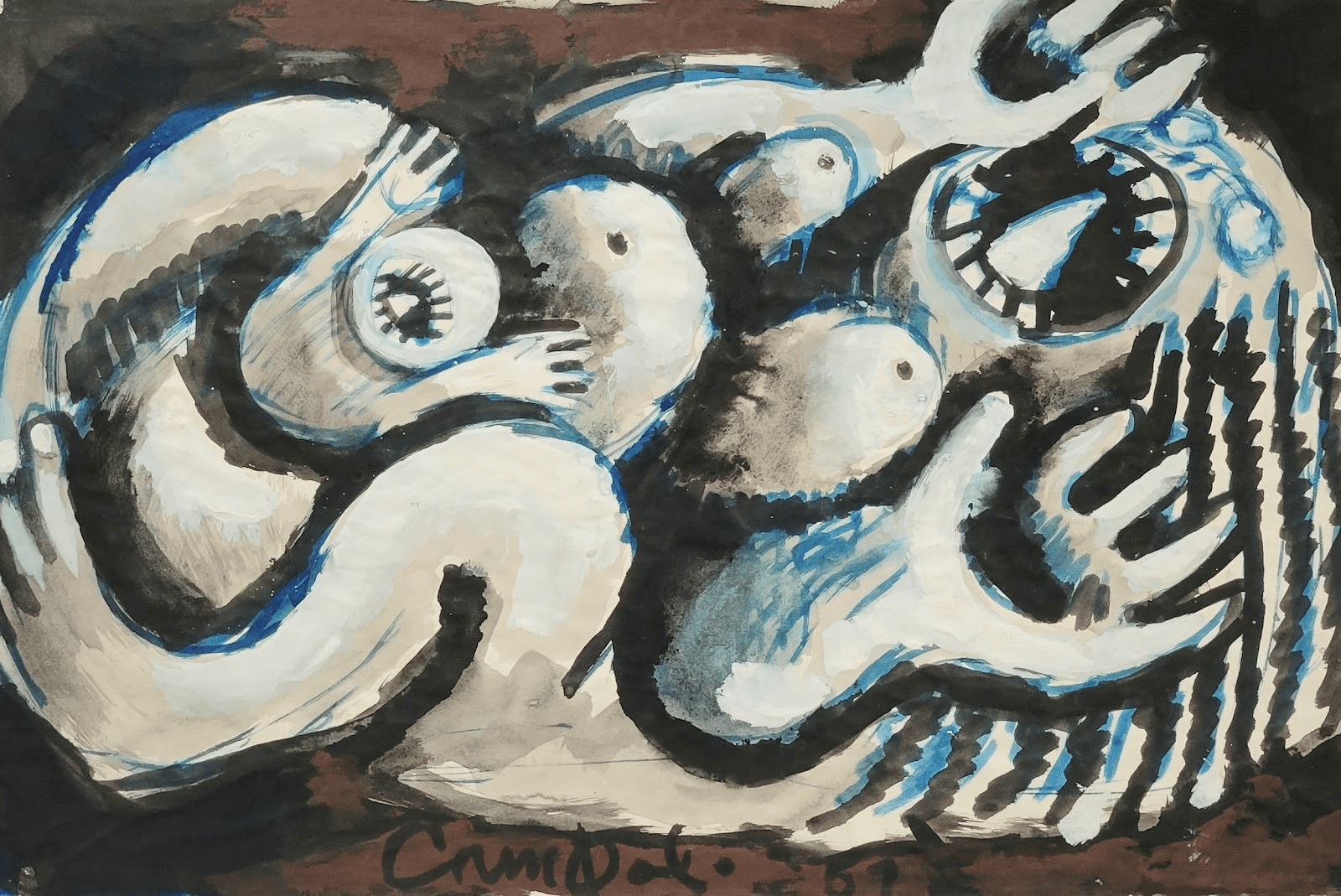
Creative Work
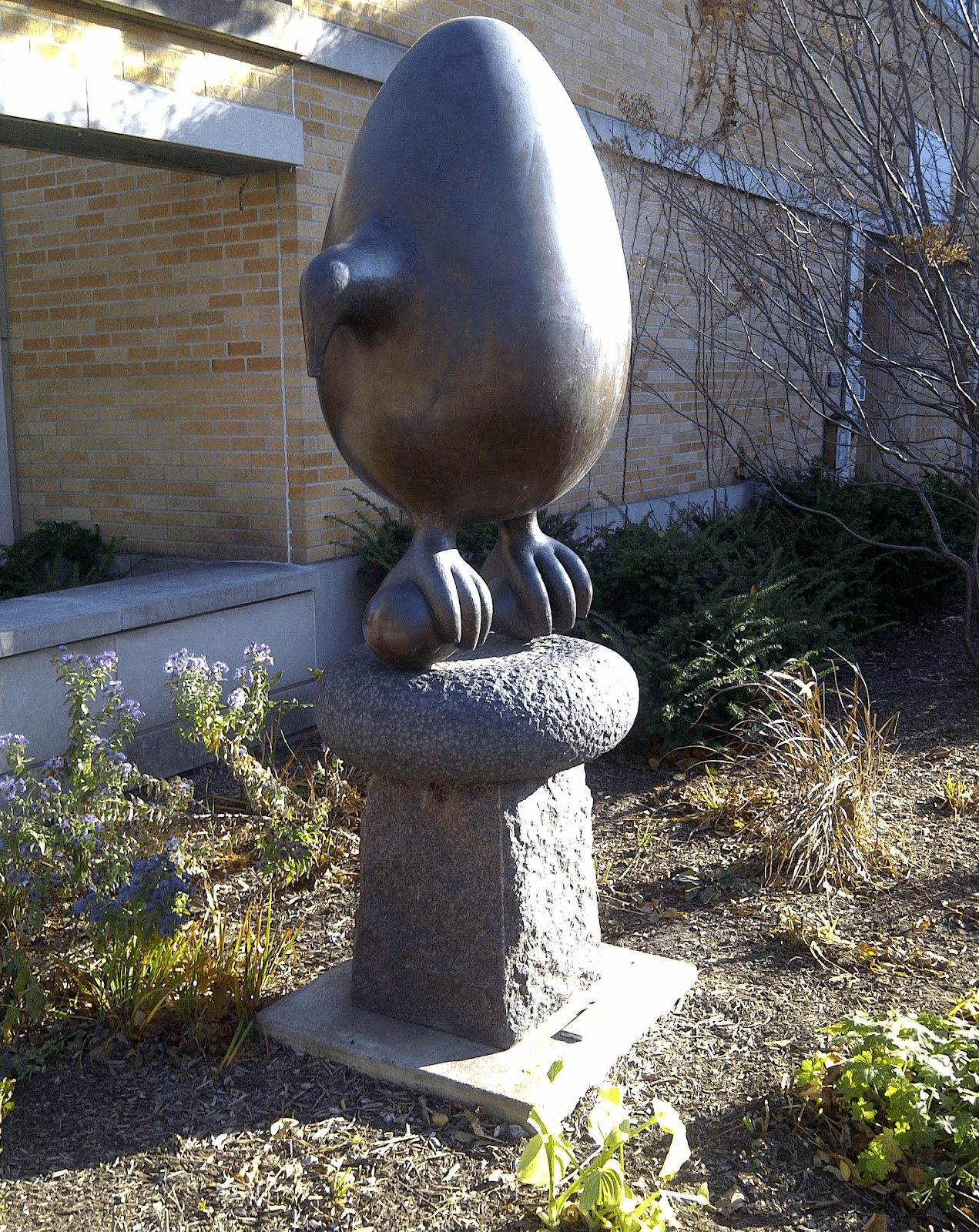
Campoli created organic, rounded “energy forms,” often drawing inspiration from the spirit of birds, animals, and eggs. He worked with bronze, clay, stone, and mixed media, sometimes crafting abstract birdbaths that became increasingly surreal. His work Bird of Peace (1964), featured at the Carnegie International Exhibition in Pittsburgh, demonstrates his ability to combine symbolism, mythology, and expressiveness.
Campoli was a member of the “Monster Roster” group, which critic Franz Schulze characterized as blending the grotesque, fantasy, and mythology with existential reflection. His work combined technical mastery with lyricism and archetypal imagery, making it unique in the context of 20th-century art.
Exhibitions and Career Recognition
Campoli exhibited actively from the late 1940s through the 1950s. He participated in the Momentum Exhibitions (1948–1950), organized by students of SAIC and the Institute of Design, as well as the Veteran’s Exhibition at the Art Institute of Chicago (1948). In the 1950s, he began showing at Allan Frumkin Gallery, and in 1959, his work The Birth of Death was featured at MoMA in New York as part of the exhibition New Images of Man, alongside pieces by Karel Appel, Alberto Giacometti, and Leon Golub.
In 1971, the Museum of Contemporary Art Chicago held a Campoli retrospective, underscoring his contribution to local and national art. His works have also been exhibited at the Art Institute of Chicago, the Smart Museum of Art, Beloit College, and the Hyde Park Art Center. In his later years, Campoli struggled with bipolar disorder, which impacted his productivity, yet he continued to teach and participate in exhibitions.
Campoli taught at the Institute of Design at the Illinois Institute of Technology, where he introduced casting techniques and influenced many subsequent artists. His teaching approach was characterized by interactivity and experimentation: students created sculptures from readily available materials, mastered new techniques, and learned to combine creativity with technical thinking. Students described him as a teacher whose energy and creativity inspired even children to transform simple materials into artistic objects.
Legacy
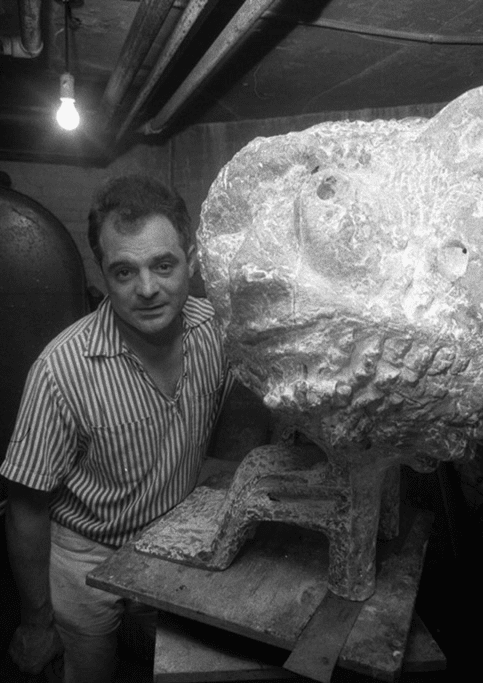
Cosmo Campoli left a significant legacy of figurative works that unify themes of birth and death, fantasy, mythology, and existentialism. His bronze, clay, and stone works can be found in MoMA, the Museum of Contemporary Art Chicago, the Smart Museum of Art, and numerous private collections.
One of Campoli’s key works is The Birth of Death, which merges the concepts of birth and death into a single form, demonstrating the cyclical nature of life. This sculpture combines organic and surreal elements, creating a sense of movement and transformation. Bird of Peace (1964) symbolizes peace and spiritual freedom, reflecting the metaphorical flight of a bird as a symbol of hope. Similarly, his series of birdbaths and abstract eggs emphasizes the concept of rebirth, origin, and the potential hidden within life.
Campoli also worked on large-scale projects, including Spumoni Village, where he and Dutch artist Sonia Weber Gilkey created an interactive installation that combined surreal figuration with mythological narratives. These works demonstrate his ability to transform everyday shapes into symbolic structures that convey deep psycho-existential meanings. His approach to sculpture was rooted in creating “energetic forms” that live their own lives in space, provoking a sense of presence and interaction in the viewer. Campoli combined casting techniques, bronze, and clay with abstract and organic thinking, resulting in works that were aesthetically compelling yet profound.