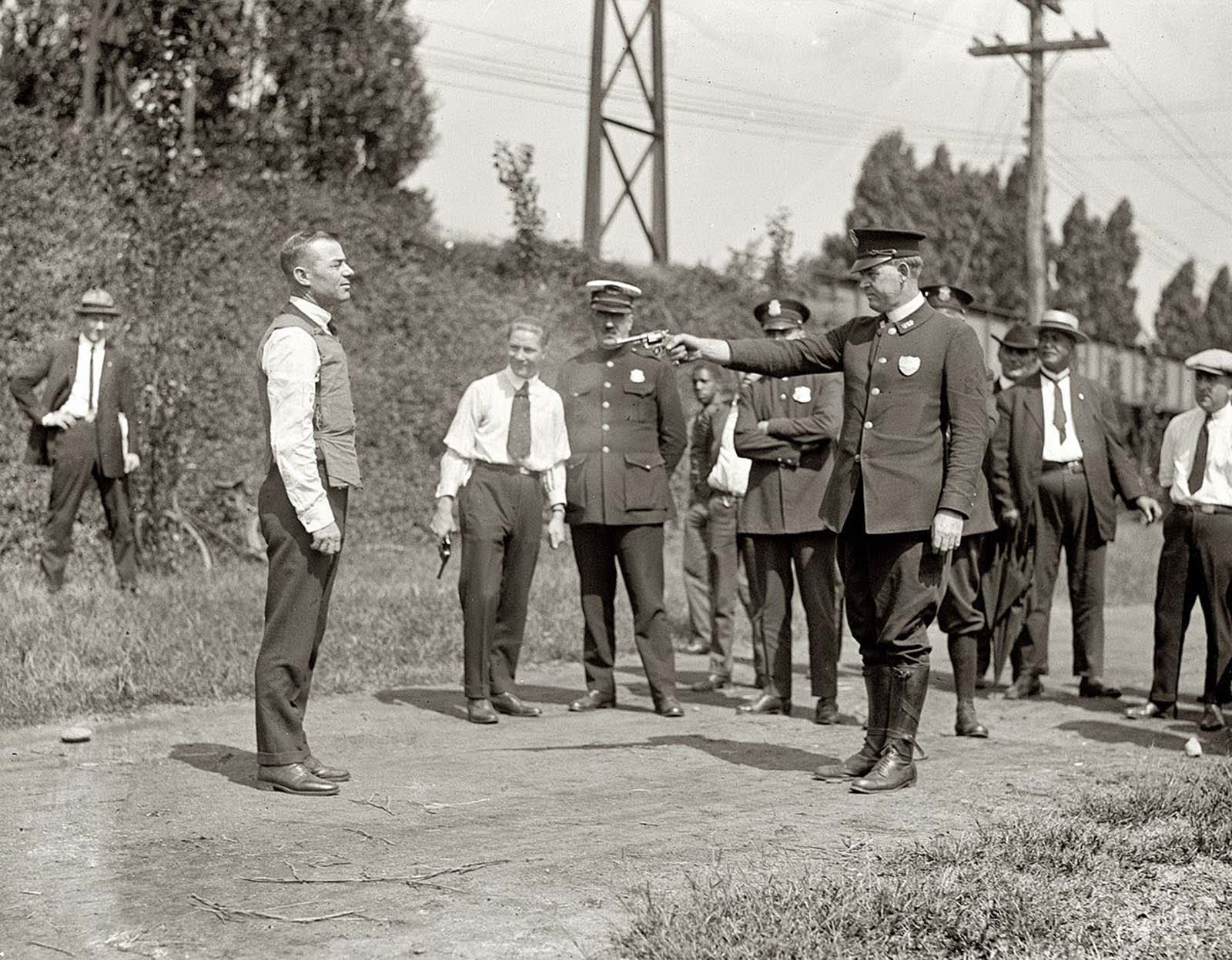

Chicago, March 16, 1897. Two short men stand opposite each other. One of them is holding a gun and is about to shoot. They are watched by a crowd, among whom are the mayor of the city, the chief of police and a priest. Still, the man pulls the trigger and the bullet hits the target. The victim falls to the ground, but almost immediately rises to his feet and raises his arms, showing that everything is fine. The audience rejoices, applauds and takes off their hats.
What happened? Did they shoot blanks or how was this possible? In fact, everything was much more serious. The bullets were real and the situation wasn’t a trick at all, but a test of the newly invented silk bulletproof vest. Learn more about it at ichicago.net.
Monk in Chicago
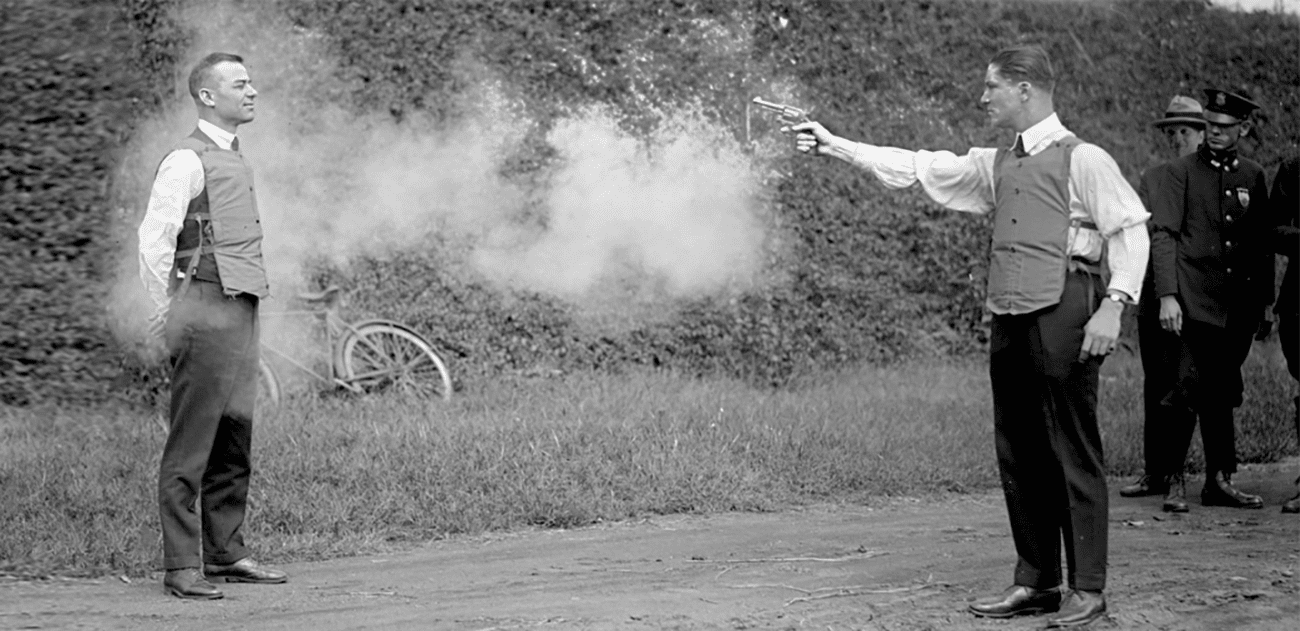
The man who placed his chest under the bullets and entered American history was Casimir Zeglen. The man was born in Poland. At the age of 18, Casimir was ordained as a monk and a few years later, he moved to Chicago, where he dramatically changed his life.
While in the US, Casimir decided to try his hand at invention. Just in that period, American anarchists constantly carried out attempts on the lives of influential personalities. Thus, the Mayor of Chicago Carter Harrison was killed in his own home. Zeglen was deeply affected by this tragedy, so he decided to invent something for the benefit of humanity. Therefore, the Polish monk began to develop bulletproof vests of a new design, so that people could freely wear them over or under their normal clothes.
It all started with a doctor
Until the end of the 19th century, reliable protection against bullets was provided by metal plates. However, they were very uncomfortable and impeded movement due to their heavy weight. Everything changed in 1881, when Dr. George Goodfellow from Tombstone, Arizona, performed an autopsy on a shot man.
He noticed that a silk handkerchief, which was in the pocket of the deceased, stopped the bullet and reduced the depth of penetration. George was so interested in his own discovery that he began researching the semi-protective properties of silk and even created a vest consisting of 13 layers of silk. Of course, the large amount of cloth weighed much less than the metal plate, but it was also uncomfortable to wear. Therefore, the doctor reduced the number of layers during the experiments. However, the implementation of the idea wasn’t successful by far, but it became clear that the invention of a fabric bulletproof vest was only a matter of time.
Since Goodfellow was devoted to the profession, he continued to treat people, abandoning his research on silk.
Casimir Zeglen’s vest
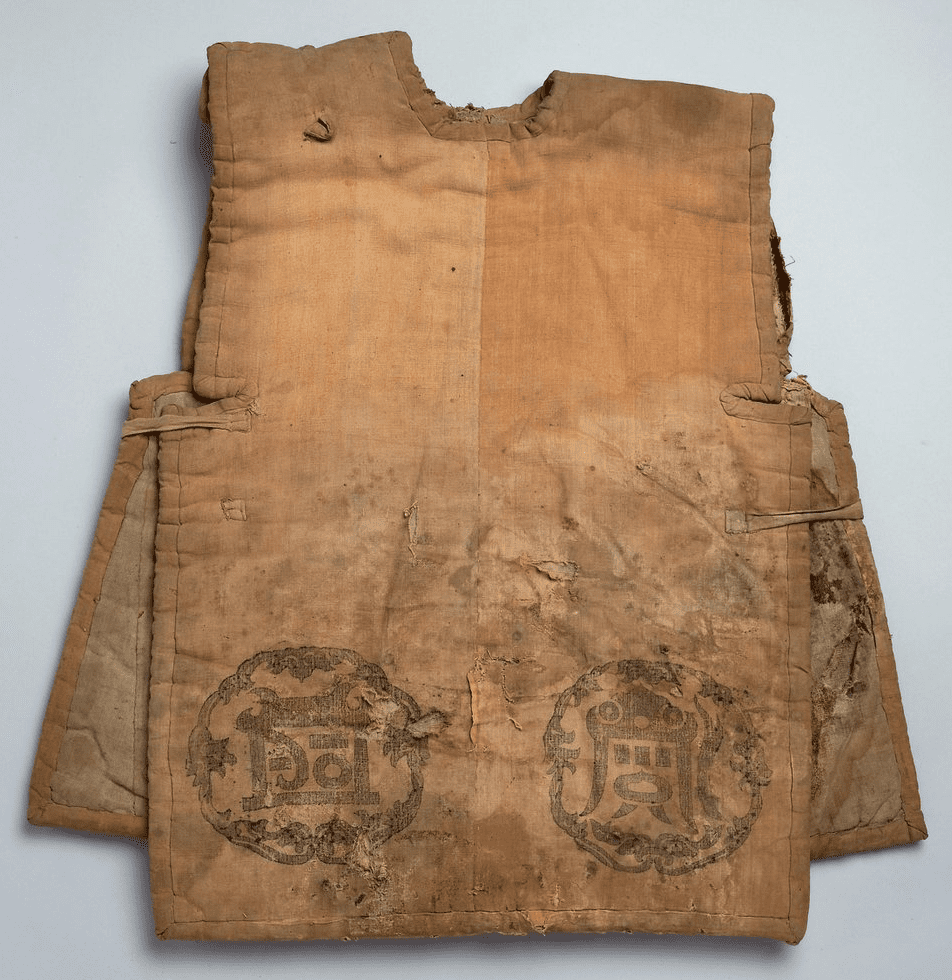
Let’s recall the events in Chicago square on March 16, 1897, again. Zeglen’s assistant fired and hit him directly in the chest. Probably, he felt pain, but it didn’t harm him because of his newly invented bulletproof vest. That sample was 1-centimeter-thick, thus it was thinner than all the previous ones.
Casimir came up with a method of sewing fabric layers, which reveals the properties of silk to the maximum. He sewed the vest himself but never tested it before the demonstration. Fortunately, he survived. Further experiments showed that only perfectly stitched vests were truly effective and the required level of accuracy was very difficult to achieve in hand-made samples.
Zeglen was an amateur inventor without special education. Therefore, he couldn’t independently create a machine for the faster production of reliable vests. He began to look for investors, but the search was unsuccessful and he left for Europe in 1897.
There, Casimir turned to Jan Szczepanik, an inventor who developed the concept of the telectroscope and several other useful devices that brought him fame and fortune. Thus, the men began to develop the automated production of silk bulletproof vests together. They succeeded, although the products were available only to the rich. Then Jan Szczepanik tried to buy the patent, but Casimir refused.
Wanting revenge on his former partner, Jan convinced almost everyone that he invented the silk bulletproof vest. Having been upset, Casimir Zeglen returned to Chicago and tried to find investors and set up production. Apparently, Jan Szczepanik turned out to be a more talented entrepreneur, as he managed to popularize the products in Europe.
Zeglen was much less lucky in Chicago. He abandoned his original plan and founded the Zeglen Tire Co. and American Rubber and Fabric Company, producing tubeless impenetrable tires. However, we don’t know whether they were successful. Even the date of Casimir’s death wasn’t known, which indicates that the inventor didn’t achieve either wealth or fame.
Weapons technology began to develop actively at the beginning of the 20th century and as of 1910, the silk vests of Szczepanik/Zeglen became ineffective. Nevertheless, their invention laid the foundation for the creation of more reliable models.