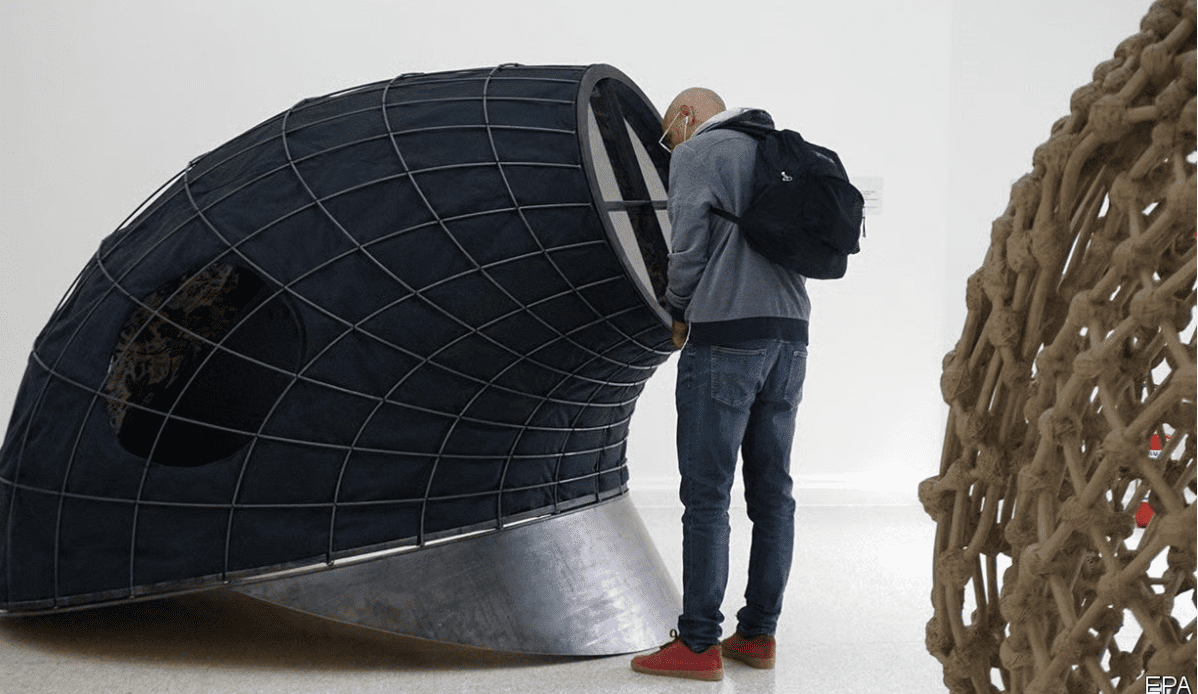

Martin Puryear is an American sculptor renowned for his complex, thoughtfully constructed forms that merge organic and geometric motifs. His work is characterized by a high level of technical mastery and profound poetic expression. Puryear purposefully avoids formalism and minimalism, striving instead for each piece to reflect a unique connection between the artist, the material, and the act of creation. Read more on ichicago.
Biography
Born in Washington, D.C., Puryear developed a fascination with traditional crafts in his youth, creating tools, boats, musical instruments, and furniture. In 1963, he earned a bachelor’s degree in fine arts from the Catholic University of America. For the next two years, Puryear worked with the Peace Corps in Sierra Leone, where he studied local crafts and traditional building methods.
From 1966 to 1968, Puryear studied printmaking at the Royal Swedish Academy of Arts in Stockholm before returning to the U.S. for graduate studies in sculpture at Yale University. Although he encountered minimalism during his studies, he ultimately rejected its impersonality, choosing instead a path of deep exploration into material and craftsmanship.
After receiving his MFA, Puryear began teaching at Fisk University in Nashville and the University of Maryland in College Park. In 1977, following a studio fire in Brooklyn, he relocated to Chicago and taught at the University of Illinois. His teaching philosophy combined the practical mastery of craft with artistic conceptuality, nurturing a new generation of sculptors.
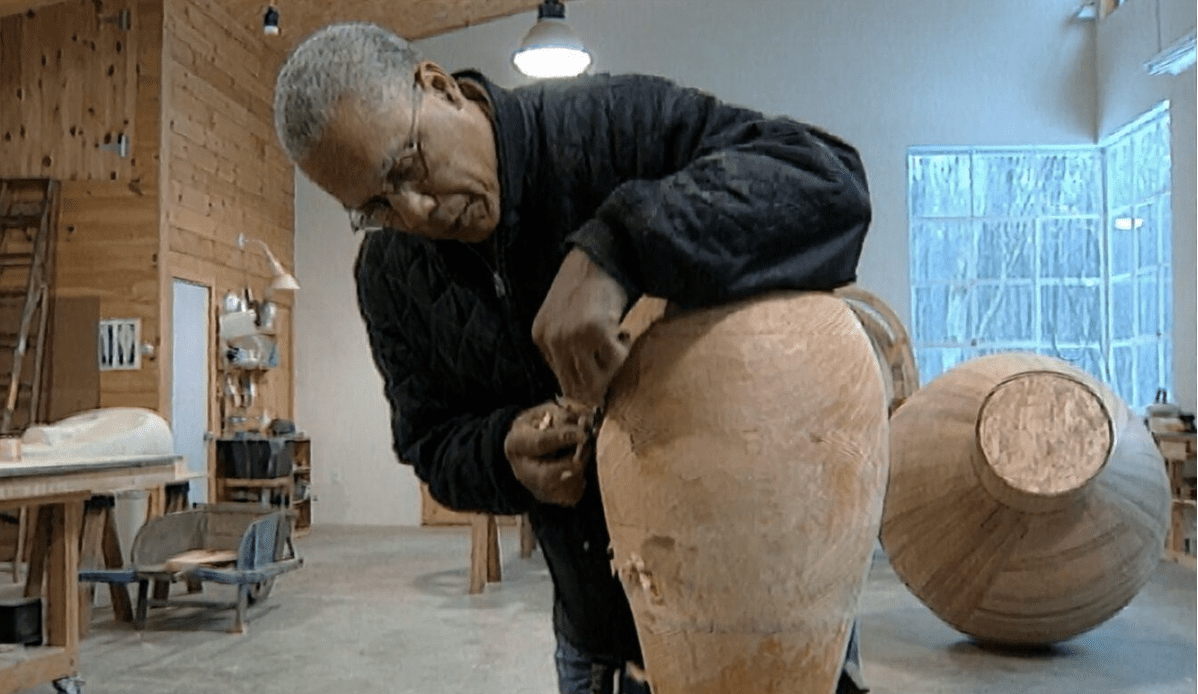
Artwork
Puryear’s work is characterized by a reductive approach: he aims to bring the material closer to its primary state, creating a “necessity” and “fullness of being within the limits” of the form. His pieces organically merge geometric and natural forms, reflecting the history of the objects and the process of their creation. Through the use of traditional crafts, Puryear achieves poetic expressiveness and personal symbolism.
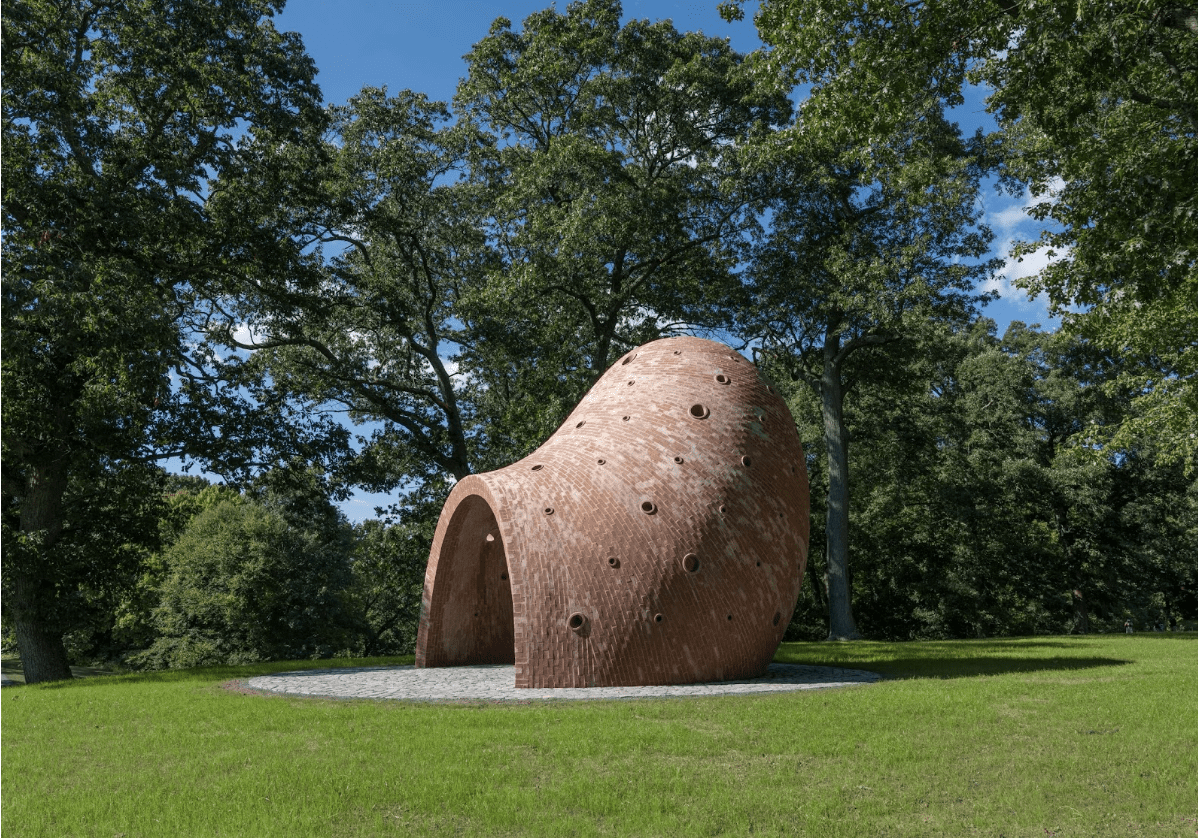
Many of his works are monumental in scale, starting from early pieces for Artpark in New York in 1977 up to 2023, when Puryear completed his first large-scale brick sculpture, Lookout, at the Storm King Art Center in New York.
Among the artist’s most notable works are:
- Vessel (1997–2002) — an exhibit at the Smithsonian American Art Museum that demonstrates organic forms and the use of raw material;
- Bearing Witness — located at Woodrow Wilson Plaza in Washington, D.C., it combines geometric and organic elements, creating a spatial interaction with the viewer;
- Lookout (2023) — Puryear’s first large-scale sculpture made of brick, featuring a dome-like shape with 90 circular openings of various sizes. The design allows visitors to view the surrounding landscape from both inside and outside the sculpture. The project presented complex technical challenges until a structural solution was found collaboratively with MIT and traditional masonry specialists.
For nearly fifty years, Puryear has created works that translate his abstract sculptural language into public spaces. His pieces reflect meticulous attention to material, refined forms, and spatial harmony, demonstrating a fusion of the artist’s personal experience and public dialogue.
Style and Artistic Principles
Martin Puryear’s work is distinguished by a deep integration of craft and conceptual thought. His sculptures blend organic and geometric forms, creating a sense of natural harmony and logical coherence. Central to his practice is the principle of reduction, where the artist aims to bring the material and form as close as possible to their natural essence. Despite associations with minimalism and formalist sculpture, Puryear rejects the notion that his work is objective or non-functional. His forms originate in traditional craftsmanship but remain poetic and deeply personal, reflecting the history of the objects, their creation process, and themes of race, identity, and ritual. Each Puryear sculpture is a unique dialogue between material, maker, and viewer, translating his specific abstract language into a monumental scale.
The artist actively works on public and site-specific projects, ranging from early pieces at Artpark (New York, 1977) to contemporary large-scale works like Lookout (2023) at the Storm King Art Center. The creation process always begins with sketches or models that Puryear crafts by hand before translating them into the final material—wood, metal, brick, or other natural elements. This ensures that every work retains the intimacy of hand-crafting, even in large public installations.
A characteristic feature of his art is the ability to combine technical skill with deep symbolism. For instance, in Vessel (1997–2002) or Bearing Witness, the forms reflect not only structural logic but also a sense of spiritual space and a connection to history. Every Puryear object demonstrates meticulous attention to detail, precise command of the material, and an aspiration for the sculpture to possess its own internal logic and integrity. His artistry emerges as a synthesis of craft, concept, and symbolism, where material and form, scale and space, abstraction and metaphor combine into a visually compelling and intellectually rich language of contemporary sculpture.
Career Achievements
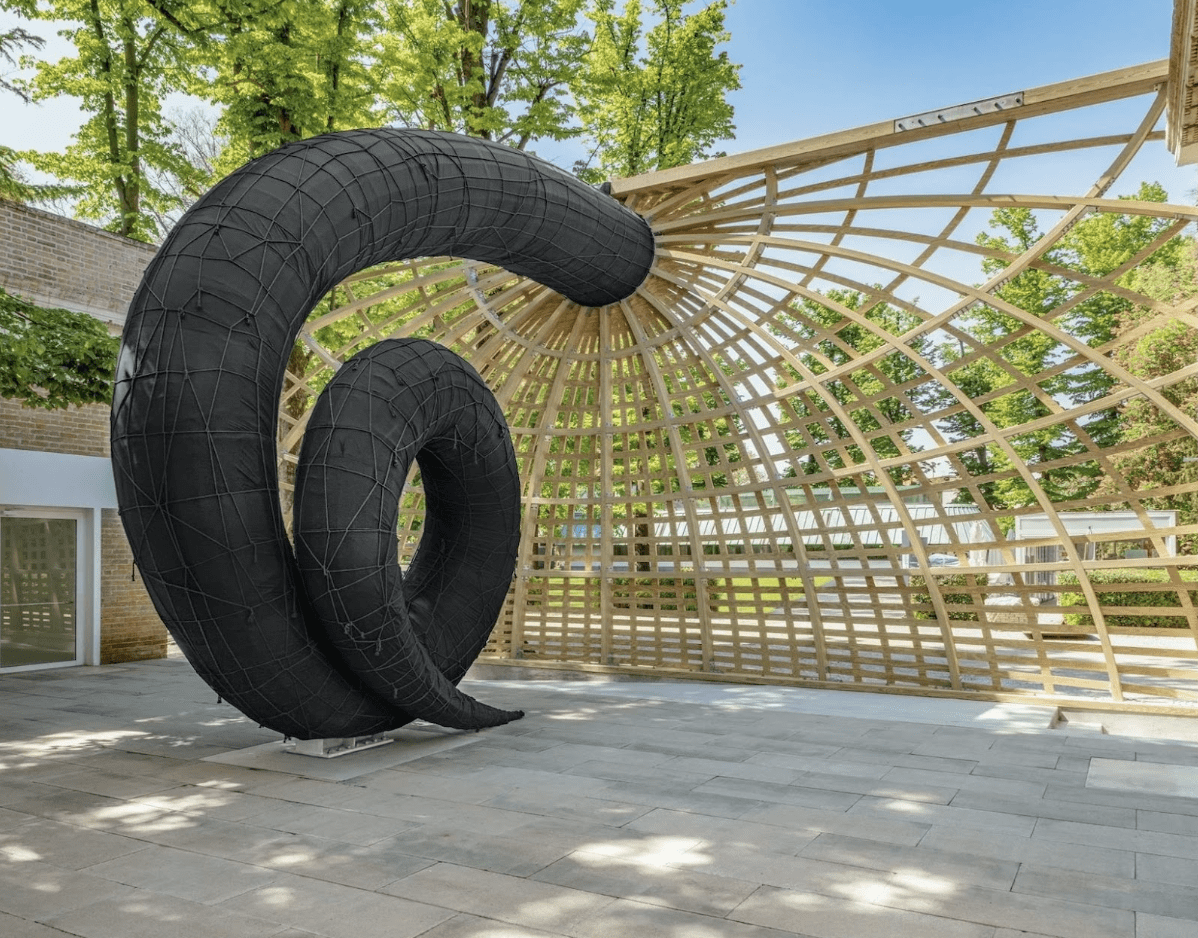
Puryear participated in the Whitney Biennial in New York in 1979, 1981, and 1989. In 1982, he traveled to Japan on a Guggenheim Fellowship, where he studied architecture and garden design. In 1989, Puryear was awarded a MacArthur Fellowship and represented the U.S. at the São Paulo Biennial in Brazil. In 2007, the Museum of Modern Art (MoMA) organized a retrospective of his work that traveled to Fort Worth, the National Gallery of Art, and the San Francisco Museum of Modern Art. From 2015–2016, the Morgan Library & Museum presented an exhibition of his drawings, Martin Puryear: Multiple Dimensions. In 2012, President Barack Obama awarded Puryear the National Medal of Arts, and in 2019, he represented the U.S. at the Venice Biennale.
Martin Puryear is a recipient of numerous awards and fellowships, and his works are widely represented in museums and private collections across the U.S. and globally. His approach to sculpture—a blend of craft, material, and conceptual expression—has left a significant mark on contemporary art, and his monumental public sculptures continue to inspire new generations of artists and viewers.
Throughout his career, Martin Puryear has been active in public art, creating large-scale projects for River Road Station in Chicago, Chevy Chase Garden Plaza in Maryland, Belvedere Park in Battery Park City, New York, and for the National Oceanic and Atmospheric Administration (NOAA) in Seattle. His sculptures integrate harmoniously into urban spaces, forming a unique dialogue with the environment and the viewer.
Personal exhibitions hold an important place in Puryear’s body of work. Among the most notable are a showing at the Corcoran Gallery of Art (1977), survey exhibitions organized by the University Gallery at the University of Massachusetts at Amherst (1984), the Art Institute of Chicago (1991–1993), the Virginia Museum of Fine Arts (2001–2002), the BALTIC Centre for Contemporary Art in the United Kingdom (2003), and the major retrospective at the Museum of Modern Art (MoMA) in New York (2007).