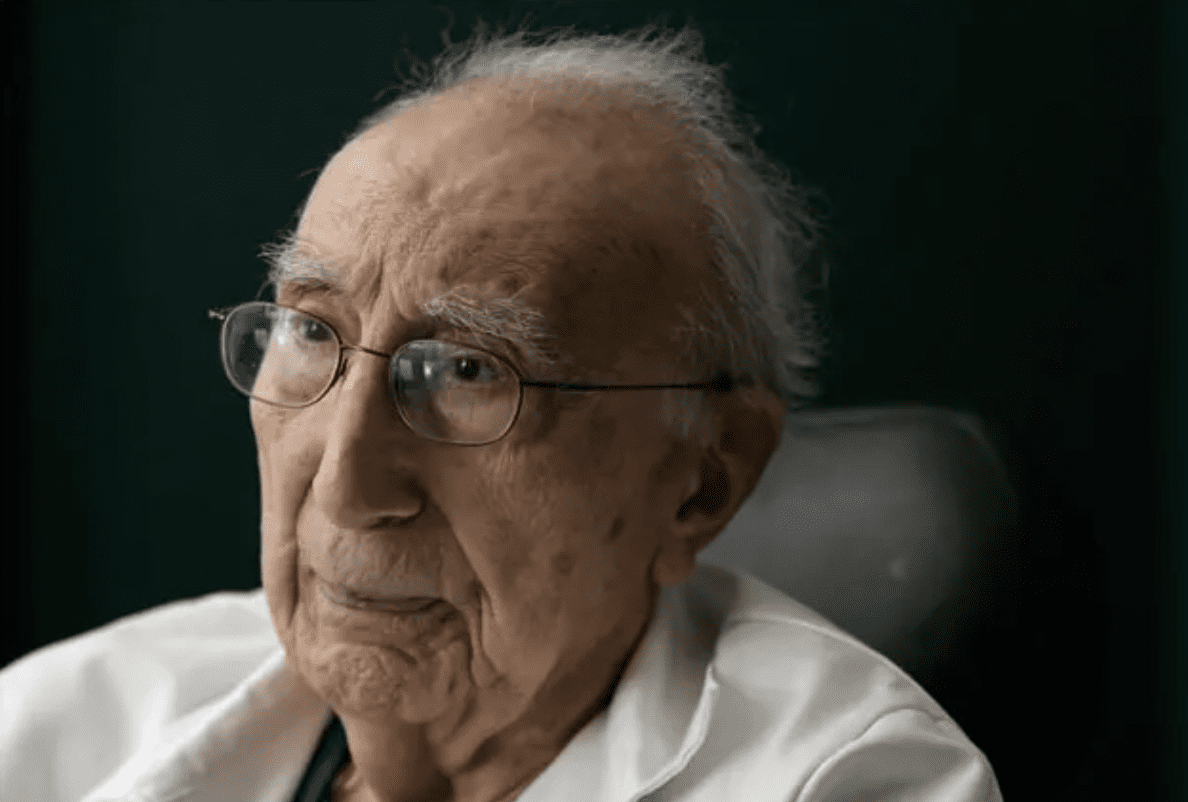

He is a legendary figure in the world of medicine, whose contributions to cardiac surgery changed the course of modern heart surgery. His name became synonymous with innovation, skill, and medical dedication. For decades, he was a driving force of change not only in the United States but around the world, laying the foundation for what we now consider the standard of care in cardiothoracic surgery in the 21st century. Also, learn about the Spanish flu epidemic in Chicago. More at ichicago.net.
Biography
Michael Ellis DeBakey was born on September 7, 1908, in Lake Charles, Louisiana, to a family of Lebanese immigrants. His parents instilled in their son the values of education, hard work, and a deep respect for human life. Even as a child, Michael showed an interest in mechanics and biology, reading extensively and tinkering—this passion for combining exact sciences with a humanitarian mission would later become the foundation of his professional path. In the 1930s, DeBakey enrolled at Tulane University School of Medicine in New Orleans. It was here, while still a student, that he made his first major breakthrough: he created a roller pump for blood transfusion, which allowed for continuous circulation. At the time, the device seemed like an engineering experiment, but it later became a key component of the heart-lung machine, essential for performing open-heart surgery. This pump, later integrated into the cardiopulmonary bypass machine, enabled surgeons to temporarily stop the heart during operations—something that was previously impossible and fatally dangerous. In effect, DeBakey’s invention laid the technological groundwork for the development of modern cardiac surgery.
His precision impressed his professors even then. Alongside his medical education, he studied mathematics, physics, and mechanics, which allowed him to view medical problems not only from a doctor’s perspective but also as an engineer seeking an effective technical solution. After completing his internship and residency, DeBakey trained in Europe, where he was exposed to the latest surgical approaches. It was during these years that he definitively decided his calling was cardiac and vascular surgery. In the future, he would not just perform thousands of operations—he would become the one to define the very architecture of this medical field.
For decades, DeBakey was a regular speaker at cardiothoracic surgery symposiums in Chicago. Starting in the 1970s, DeBakey was involved in developing standards for pediatric cardiac surgery. In this context, he collaborated with specialists at Children’s Memorial Hospital, now the Ann & Robert H. Lurie Children’s Hospital of Chicago. His experience in aortic reconstruction became the basis for adapting adult techniques for pediatric patients, which was a breakthrough in treating congenital heart defects. In the 1990s and 2000s, DeBakey received numerous honorary awards from Chicago’s medical institutions, including an honorary fellowship from the Chicago Medical Society.
Pioneer of Modern Cardiac Surgery
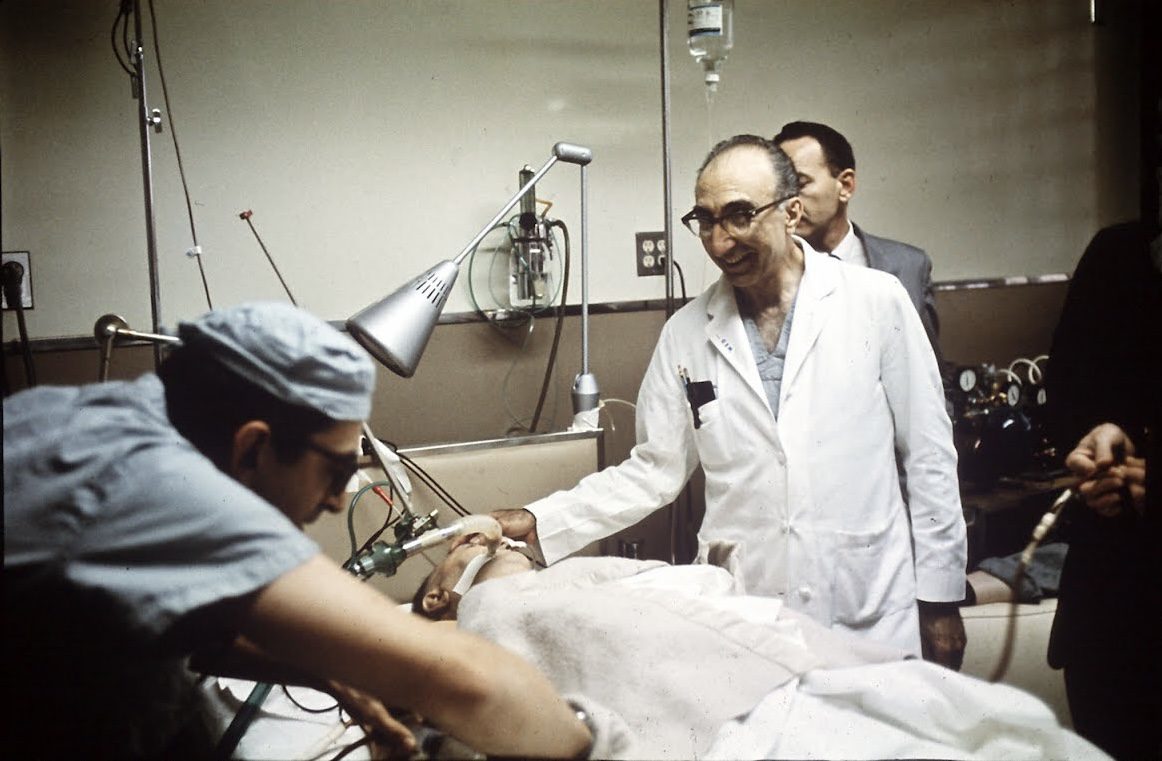
After completing his service in the U.S. Army during World War II, Michael DeBakey returned to civilian medicine and began a new phase of his career in Houston, Texas. It was here, at Baylor College of Medicine, where he became a professor and surgeon, that his most fruitful scientific and clinical work began.
From the 1950s to the 1970s, he performed a series of innovative operations that forever changed medical practice:
- He was the first in the world to successfully remove a blockage from a carotid artery, which was a breakthrough in stroke prevention and the foundation for the development of carotid surgery.
- He was the first to use an artificial heart as a temporary device to support circulation. This was the first step toward developing modern implants that would later save thousands of lives of patients with heart failure.
- His team developed artificial aortic grafts from Dacron—a fabric that proved ideal for vascular surgery. DeBakey not only used these grafts in clinical practice but also experimented with materials himself, even using his own mother’s sewing machine to create the first prototypes.
- He perfected the technique for treating aortic aneurysms, particularly in the thoracic section. His operations were so precise and effective that they came to be known in medical literature as “DeBakey procedures.”
DeBakey also pioneered the concept of a multi-step treatment for atherosclerosis. Instead of focusing solely on treating the consequences, he proposed a systemic approach: controlling blood pressure, cholesterol levels, modifying lifestyles, and performing planned vascular surgery.
In the mid-1960s, he was one of the first to perform a coronary artery bypass—an operation that is routine in the 21st century but was a risky experiment at the time. DeBakey developed a technique that significantly reduced post-operative mortality and increased the life expectancy of patients with ischemic heart disease.
Contributions to Public Medicine
During World War II, Michael DeBakey not only served in the U.S. Army as a military surgeon but also made a revolutionary contribution to medical care on the front lines. It was he who proposed the creation of Mobile Army Surgical Hospitals (MASH)—fast, mobile, fully equipped medical units that could be rapidly deployed to follow combat operations. This idea radically changed the approach to treating the wounded; thanks to swift surgical intervention on the battlefield, the survival rate among soldiers increased significantly.
After the war, DeBakey led a group of experts tasked with reforming the medical care system for veterans (the VA system). He believed that former soldiers should have access to the best medical services and advocated for the development of surgical departments in veterans’ hospitals, using the experience gained during the war. DeBakey served on national commissions that developed recommendations for public health policy and actively supported the launch of the Medicare program in the 1960s—a medical insurance system for the elderly. He was also appointed chairman of the National Advisory Heart and Lung Council, where he led the development of strategies for federal funding of research into cardiovascular diseases—the leading cause of death in the U.S. It was under his leadership that large-scale clinical trials were initiated, which changed treatment protocols.
Recognition
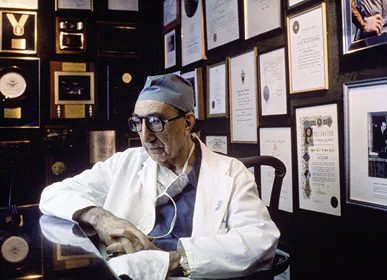
Michael DeBakey became not only a symbol of American cardiac surgery but also a figure of global stature. His achievements were recognized with the highest honors in the United States, including:
- The Presidential Medal of Freedom (1969) — the highest civilian award in the U.S.
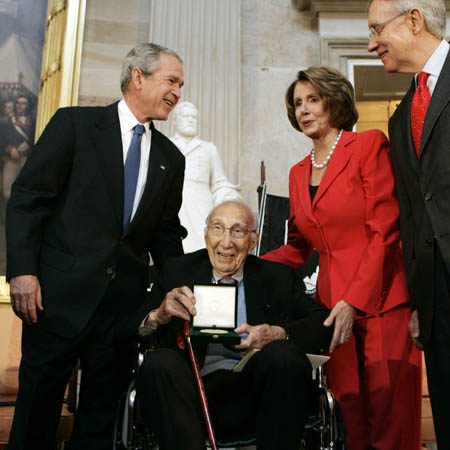
- The Congressional Gold Medal (2008) — recognizing his contribution to medicine at a national level.
- The Lasker Award, numerous honorary degrees from universities in the U.S., Europe, and the Middle East.
His own life became an example of unwavering dedication to medicine. In 2006, at the age of 97, DeBakey suffered a thoracic aortic dissection—the very condition he had successfully treated in his patients for decades. The surgery was performed by a team of his own students using the technique he himself had invented. The patient made a full recovery and later participated in scientific events. Michael DeBakey passed away on July 11, 2008, at the age of 99, leaving behind not just a legacy, but an entire institution in medicine.